
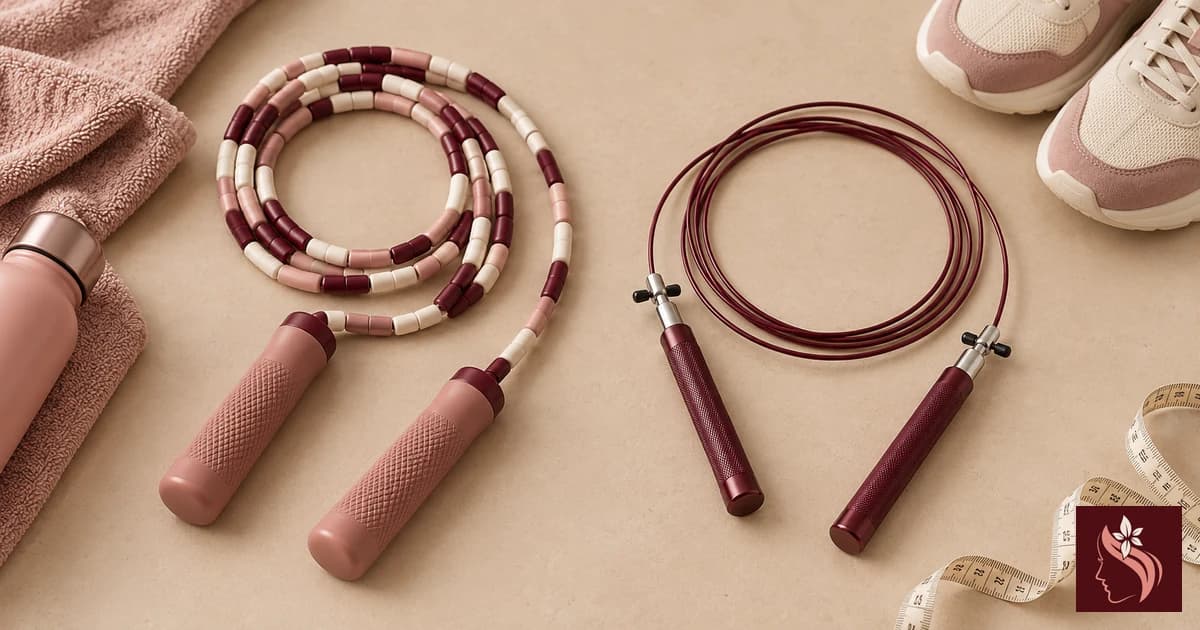
Choose for the activity you intend to do
A jump rope is simple equipment, but the words speed, weighted, beaded, and freestyle describe different constructions and intended experiences. A beginner does not need to buy the most technical style first. Identify where you plan to use it, whether you want a visible rhythm or lighter cable, how much adjustment you need, and what surface is available. A listing should give concrete details—rope type, length, handle dimensions, materials, and adjustment instructions—instead of only performance adjectives.
This guide compares publicly stated construction and setup considerations; it is not a training prescription or a promise about calories, body shape, or fitness outcomes. Her Glamness has not tested these exact models. The required product-testing box makes the status clear. Start with a type that matches your intended use and comfort, then verify specifications for the exact item and market before buying.
Cable and speed-rope designs
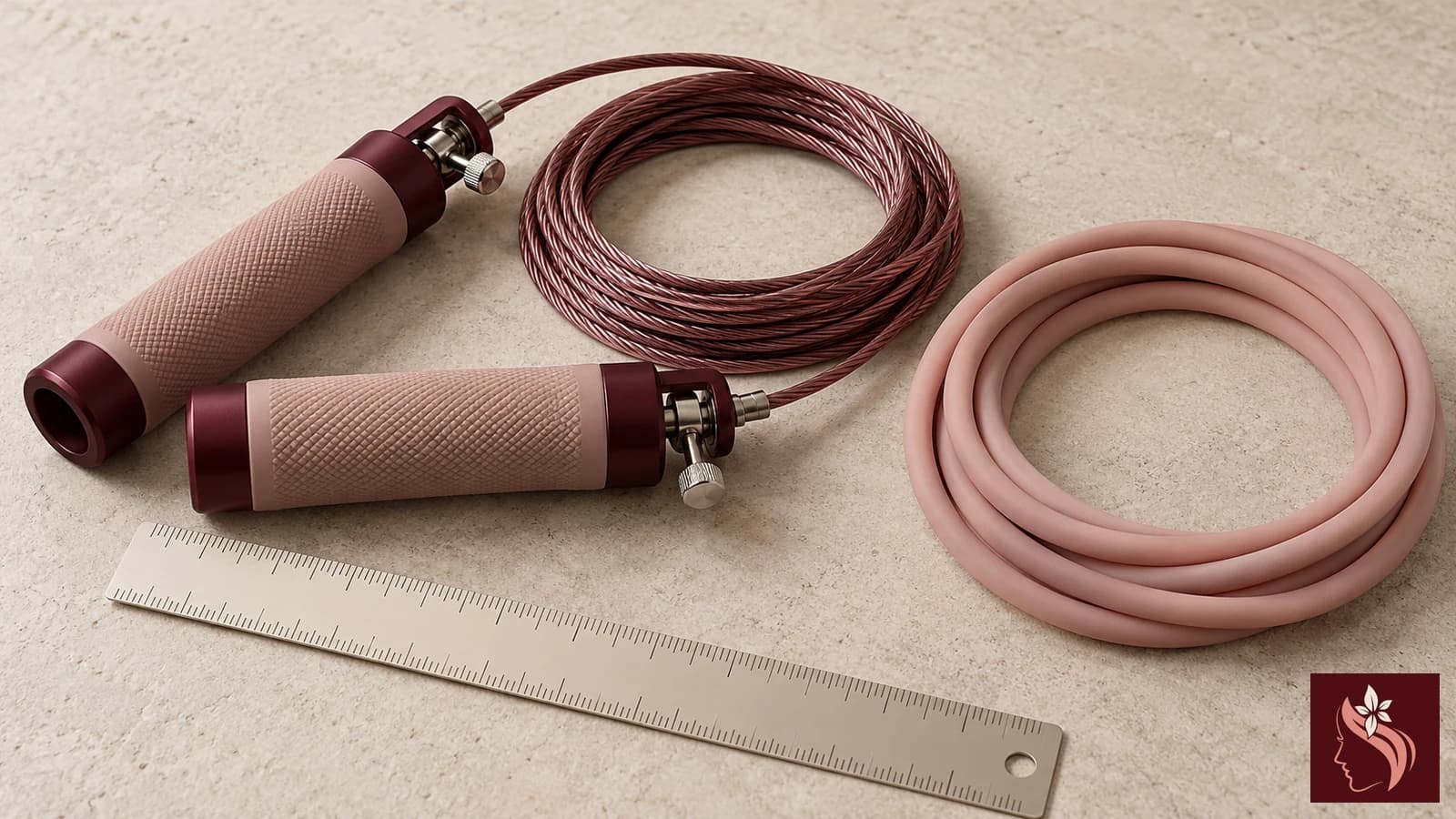
A thin cable-style rope is commonly designed to turn quickly and may have hardware that lets a user set working length. It can be compact for practiced rhythm work, but a thin cable may feel less forgiving when it catches. Check whether it is coated, how the attachment locks, whether replacement cables are available, and whether instructions require cutting. An adjustable label may still mean adjustment only within a particular system or size range.
Do not infer material, diameter, bearing type, weight, durability, or maximum length from a studio photograph. Find the maker's specification table and manual. If the listing does not explain attachment or locking, ask before trimming the cable. Control offcuts and keep them away from children and pets. Product images can depict a colorway or version no longer sold, so compare the model number and current product details rather than relying on an old image.
Beaded and solid-rope designs
A beaded rope uses short segments around a cord, making the rope visible as it moves and often producing a sound on floor contact. A solid plastic or licorice-style rope can feel more substantial than a thin speed cable. Such formats may suit rhythm drills, but feel depends on weight, diameter, length, materials, and assembly. Names differ by seller; compare the exact construction rather than assuming every product called beaded or freestyle is alike.
Check whether the cord can be shortened, how beads attach, whether spare segments are sold, and what surface the maker recommends. An image may not reveal whether an item has beads, cable, or molded material. If a detail is absent, mark it as unknown rather than inventing it. A useful starter rope is the one whose stated construction and fit align with your intended practice and available space—not a category that sounds advanced.
Weighted ropes: locate the weight
Weighted can refer to a heavier cord, weighted handles, or both. Read where the added mass sits and whether it can be removed. These constructions can change how quickly the rope rotates, so a category name alone is not enough to compare products. Look for a stated weight and unit, whether the number refers to one handle or the full rope, and whether the maker gives it before or after assembly.
More weight is not automatically better for a new user. Do not treat a heavy rope as a shortcut to a health outcome or as a guaranteed more effective workout. Follow the manufacturer's instructions and choose activity appropriate to your circumstances. People with medical conditions, balance concerns, joint symptoms, or questions about vigorous exercise should seek individual guidance. A product guide can explain construction and fit; it cannot assess a reader's readiness to exercise.
Set rope length by model instructions
Rope length is a setup parameter, not a universal number determined by a single brand-neutral formula. Start with the maker's measuring method. Some ropes ask users to stand on the center and compare handle position; adjustable systems may use numbered settings. Design, skill, movement style, and manufacturer guidance affect the recommendation. Record the adjustment range before purchase and do not cut a fixed-length cord until instructions confirm it can be shortened.
Adjust in a clear area and move slowly. Keep loose cable controlled, follow the manual, and make a small change at a time if the system permits. Confirm that a clip, screw, or end cap is secure before use. A generic diagram may not match every body proportion or rope construction. If the product page lacks a sizing guide, contact the seller or choose one with clear instructions rather than guessing from an unrelated chart.
Compare handles and replacement parts
Handles vary in length, diameter, texture, material, and rotation mechanism. A narrow, smooth grip feels different from a wider textured one, and preference may vary with hand size and hold. Check dimensions, finish, swivel or bearing description, and whether the cord passes through a removable anchor. A swivel is a design detail, not a guarantee of a better experience for every learner. Photos rarely establish exact measurements.
Inspect maintenance information: can a cable or beads be replaced, are end caps sold separately, and does the maker provide assembly help? A low-cost product with unavailable parts has a different ownership profile from one with replaceable cables. Verify warranty, returns, and damage policies. Report stated materials and dimensions rather than asserting durability without a test. A transparent summary of construction and support is more useful than a subjective rating detached from evidence.
Choose a practice surface and space
CDC physical-activity guidance emphasizes choosing an appropriate environment and equipment that fits the activity. Find a flat, stable, uncluttered surface with overhead clearance; keep pets, children, furniture, and breakables out of the rope path. A mat should remain stable and suit the rope. A soft or shifting surface may catch or slide. Follow the equipment maker's surface recommendations and inspect the area before each practice.
For outdoor sessions, check for water, uneven ground, traffic, and loose stones. Consider noise and floor wear near neighbors. In hot weather, CDC advice includes pacing activity, choosing cooler hours where possible, and stopping if faint or weak. This is general safety context, not individualized medical advice. If equipment or conditions feel unsafe, postpone or choose another activity.
Use a product-comparison checklist
Put the specifications side by side: style and material, assembled length, adjustment range, handle dimensions, total weight and location of weight, replacement options, assembly instructions, surface recommendations, and return terms. Add the date checked. If a maker gives a number without method or unit, keep its wording and mark the comparison incomplete. These fields answer practical shopping questions without claiming editors measured the products.
Elevate Rope is one supplied partner destination. Confirm the exact current listing for model, parts, price, sizing, and shipping; do not assume all of the brand's products share specifications. A partner link is a route to the merchant, not a guarantee. If an affiliate placement is shown, disclose it nearby and verify offer conditions. Merchant checkout controls final price and availability.
Sources: elevaterope.com
A practical decision checklist
A purchase comparison becomes clearer when it separates measurable facts from feel-based preferences. Measurable fields include rope and handle materials, assembled length, adjustment range, total mass, replacement components, and the maker's setup instructions. Preferences include whether the grip feels comfortable, whether the moving rope is easy for you to see, how much sound you tolerate, and whether you want a compact kit. A product table should not turn these different kinds of information into one unexplained star score; let shoppers see the tradeoffs and decide which matter.
Before use, check the actual item against its listing and manual. Confirm that fasteners are secure, the cord is not frayed, and handles are free of cracks. Store the rope so it is not sharply kinked or a tripping hazard. These are ordinary equipment checks, not a claim that inspection removes all risk. If the intended surface or adjustment instructions are unclear, contact the manufacturer. When comparing a partner product, link to the exact current model and market page and revisit it when stock or specifications change. Never leave a stale redirect in an article just to retain an old recommendation.
A final check before ordering is to look for a setup manual and a clear contact route. Confirm whether the rope arrives assembled, whether the adjustment tool is included, and whether the stated length describes the cable alone or the assembled equipment. Check the merchant's delivery estimate and return window in your country. These details are especially relevant when comparing low-cost equipment: a listed price does not show what accessories are included or what it may cost to replace a worn component. Save the exact model name so later questions refer to the same product.
Conclusion
Compare ropes by intended use, material, adjustment, fit instructions, handle dimensions, weight placement, replaceable parts, surface guidance, and seller support. A thin speed cable, beaded cord, solid plastic rope, or weighted style has construction details worth checking; no category label alone makes a selection universal.
Follow the maker's setup instructions, create a clear stable practice area, and choose activity appropriate to your circumstances. Verify the exact listing. This article is specification-based and does not report hands-on testing or promise a fitness result.


Frequently Asked Questions
What type of jump rope should a beginner buy?
Choose by intended use, fit instructions, adjustment, grip preference, space, surface, and clear specifications. No category suits every beginner.
How long should a jump rope be?
Use the exact maker's sizing and adjustment guidance. Recommendations vary by design and skill; a generic height formula may not match every model.
Are weighted ropes better for beginners?
Not automatically. Weight may be in handles, cord, or both. Compare stated details, follow instructions, and ask a professional about personal exercise concerns.
Can I use a jump rope on any surface?
Check the maker's guidance and choose a flat, stable, clear surface. Avoid slippery or damaged areas and stop if conditions feel unsafe.
Sources
- cdc.gov (checked 2026-10-28)
- cdc.gov (checked 2026-10-28)
- cdc.gov (checked 2026-10-28)
- elevaterope.com (checked 2026-10-28)