

Start with the exact product and the label date
Vitamin C serum is not a single standardized formula. A shelf may include direct ascorbic acid, derivatives with different names, water-based serums, oil suspensions, powders, and combinations with other ingredients. A product title alone does not tell you which form is present, what percentage is disclosed, how the maker says to use it, or whether the formula differs by region. Start by recording the exact product name, size, market, and date you checked. Use the manufacturer’s current product page and package label, then treat any third-party retailer description as a pointer to verify rather than the final source.
The purpose of a comparison is to make differences visible, not to declare a universal winner. Record label facts in separate columns from marketing language and from your own preferences. If the page says ‘brightening’ or ‘antioxidant,’ quote the claim as a manufacturer statement and do not transform it into a promised clinical outcome. The FDA says cosmetic claims must be truthful and not misleading, and claims about treating disease or affecting the structure or function of the body can change a product’s regulatory status. A label-reading guide should report what is stated, what is omitted, and what a label cannot prove.
Identify the vitamin C form before comparing numbers
Look for the ingredient name in the full ingredient list and for any concentration the company explicitly discloses. L-ascorbic acid is a direct form often called pure vitamin C by manufacturers. Other names, such as ascorbyl glucoside or tetrahexyldecyl ascorbate, refer to derivative forms; they are not interchangeable label entries. The Ordinary’s US listing, checked for this guide, identifies its Vitamin C Suspension 23% + HA Spheres 2% as a water-free suspension with 23% L-ascorbic acid. That is a specific formula fact, not a conclusion that it performs better than a derivative or suits every person.
Do not infer a percentage from ingredient order. FDA labeling rules generally place cosmetic ingredients in descending order of predominance, but ingredients at one percent or less may appear in any order after those above one percent, and color additives follow separate rules. A product that lists ascorbic acid near the beginning has not thereby disclosed its precise concentration. If a brand lists a number in the product name, record it as the manufacturer’s stated concentration and retain the source date. If no number appears, write ‘not disclosed’ instead of estimating from the formula list or reviews.
Sources: theordinary.com; fda.gov; fda.gov
Build a comparison table with useful fields
A reader-friendly record can compare exact variant, size, vitamin C name, disclosed percentage, formula base, packaging, directions, warning language, full ingredient-list availability, market, and date checked. Add a separate column for facts not disclosed. For instance, La Roche-Posay’s current US Vitamin C12 page identifies 12% pure vitamin C and publishes a full ingredient list; it directs users to apply a few drops in the morning after cleansing and follow with moisturizer and SPF. Those are product-page statements. We do not independently confirm the formula, stability, or the advertised result, and the package in the buyer’s hand remains the current reference if the page changes.
The Ordinary’s 23% suspension provides a useful contrast in format and directions. Its product listing describes a water-free suspension, lists ascorbic acid and a separate hyaluronic acid percentage in the product name, and directs once-daily use, ideally in the evening, with an eye-area warning and sun-protection note. A third example, The Ordinary’s Ascorbyl Glucoside Solution 12%, uses a derivative rather than direct ascorbic acid; its ingredient list and format differ. Keep the number associated with the ingredient it actually measures. Never add the separate hyaluronic-acid percentage to the vitamin C percentage or compare those totals as a strength score.
Sources: laroche-posay.us; theordinary.com; theordinary.com
Packaging and formula base are context, not a score
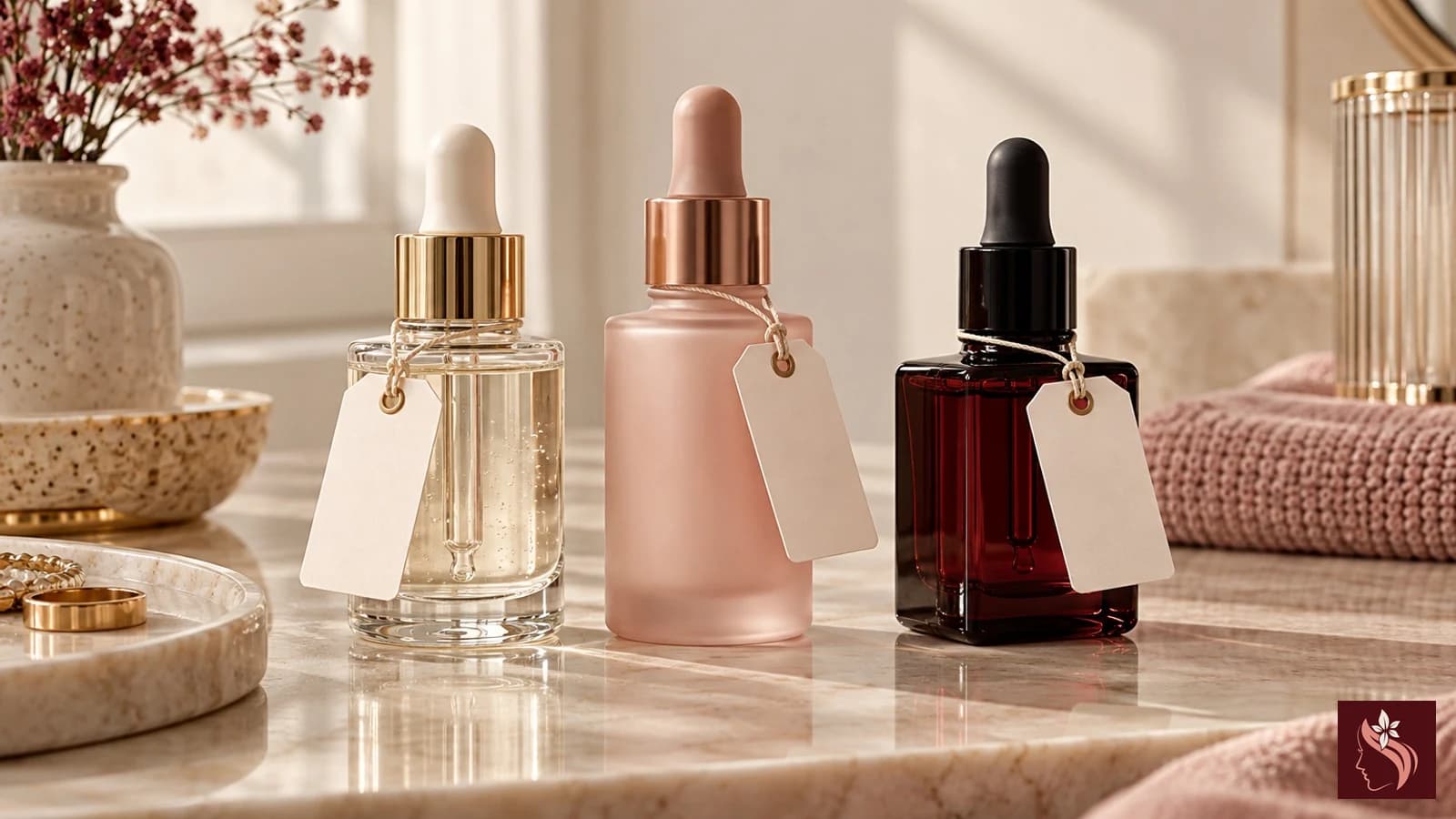
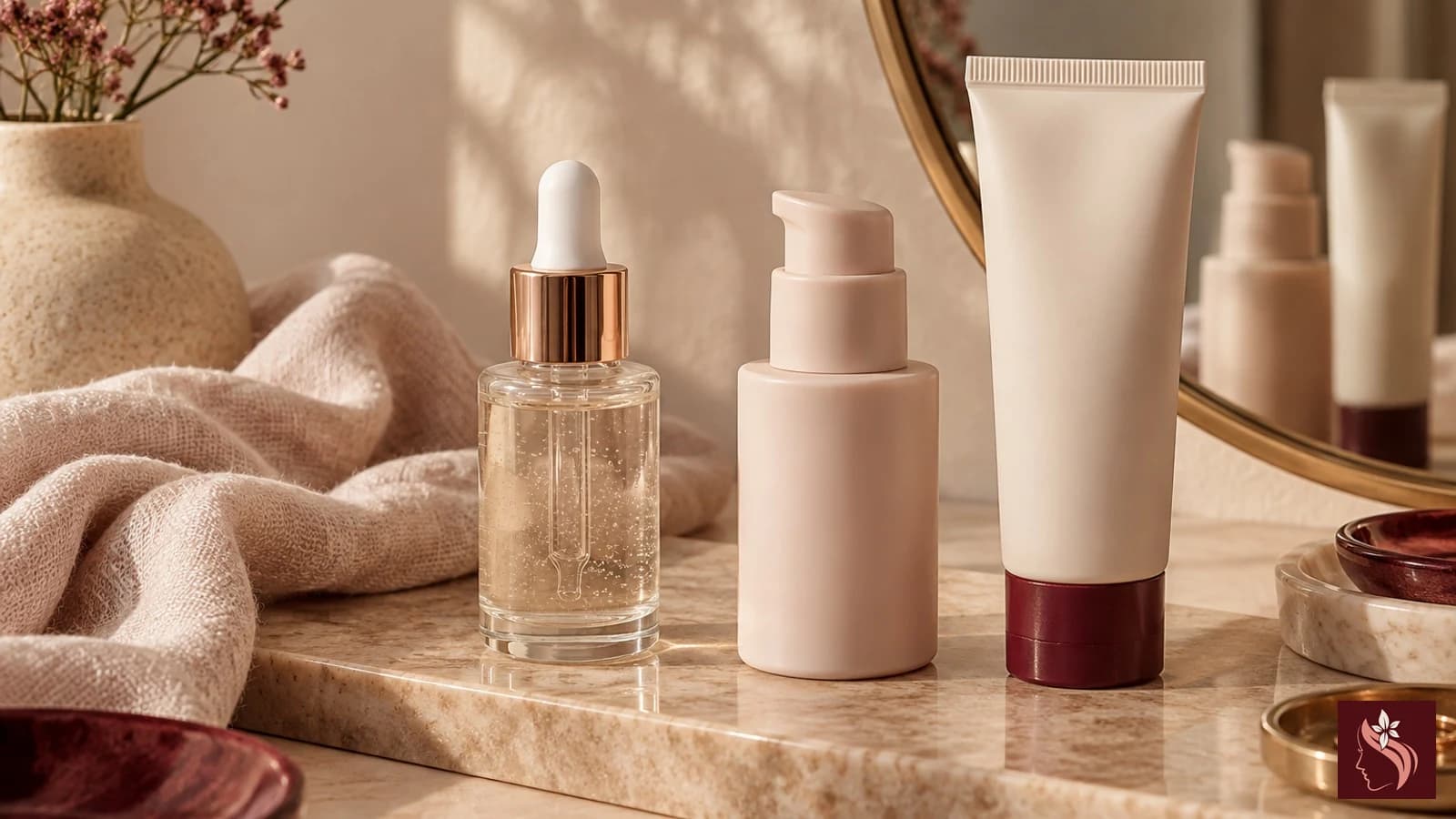
Note whether the formula is water-based, anhydrous, oil-based, a suspension, a powder, or another format only when the manufacturer states it. Also note packaging such as a dropper, pump, tube, or opaque container as a visible product attribute. Packaging can affect how a product is dispensed and stored, but a photograph cannot establish the formula’s stability or the amount of oxygen and light exposure over its entire life. Avoid claims that one package guarantees potency. If the maker supplies storage guidance or an expiration instruction, transcribe that direction and link it to the exact product page.
The ingredient list is not a complete formula blueprint. It generally does not reveal every concentration, manufacturing process, pH, or independent stability data. It may also change by region or over time. La Roche-Posay notes a full list on the product page, and The Ordinary cautions that displayed ingredient lists may differ from the box by time and region. That is why we record a checked date and direct readers to the current merchant listing. A consumer who has sensitivities should review the package they would actually purchase and ask a qualified clinician when the significance of a listed ingredient is unclear.
Sources: laroche-posay.us; theordinary.com; fda.gov

Read directions and warnings without rewriting them
Record when the maker says to use the serum, how much to apply, which areas to avoid, what step follows it, and what to do if irritation occurs. For the cited La Roche-Posay Vitamin C12 listing, the manufacturer describes a morning application after cleansing, followed by moisturizer and SPF, and says to avoid the eye area. The Ordinary’s 23% suspension listing calls for a small amount once daily, ideally in the evening, avoidance of the eye contour, sun protection during the day, and stopping and consulting a physician if irritation occurs. These are not personalized recommendations from Her Glamness; they are label directions worth reading before a purchase.
Do not flatten different cautions into an internet ‘never combine’ chart. A maker’s compatibility tool or product directions apply to that brand’s named products, while another company’s formulas can be different. If two exact package directions seem incompatible, check with the manufacturer or a clinician rather than improvising a combined regimen. If the page includes an OTC drug label, reproduce the Drug Facts information accurately and do not mix it up with cosmetic ingredients. The intended use and claims can affect which rules apply; ‘serum’ is a format, not a legal classification.
Sources: laroche-posay.us; theordinary.com; fda.gov; aad.org
Separate published evidence from marketing claims
Product pages may describe a clinical or consumer study, but the existence of a study claim is not the same as an independent review of its design. If coverage includes a manufacturer-reported result, capture the population, number of participants, application schedule, duration, measured outcome, and who conducted the research when those details are available. Preserve the maker’s wording and qualify it as manufacturer-reported. Do not generalize a result on a named formula to every vitamin C product or to every skin tone, age group, or concern. Never create before-and-after imagery or report visual results from a person who was not actually tested.
A specification-based comparison can still be useful when it refuses to overclaim. It can tell readers which label discloses a percentage, which form it names, what the directions say, what size is sold, whether the ingredient panel is accessible, and where the merchant lists current price. It cannot tell them which serum will work for their skin. If irritation, a diagnosed condition, pregnancy, or another personal health factor is relevant, route that question to a qualified professional. Our product box states the evidence boundary for this article, and no product is described as hands-on tested unless an exact-variant testing record exists.
Use the merchant link for live price and availability
Price and availability change, so this article does not treat a saved dollar figure as permanent. Open the exact merchant page for the current price in the selected market, package size, shipping information, and availability. When a product comes in multiple sizes, compare price per ounce only if both listed price and unit size are current and the arithmetic is explicit. A promotion can change the checkout price; coupon eligibility, shipping thresholds, exclusions, and expiry terms belong to the merchant. Her Glamness’s evergreen coupon codes apply only where the affiliate partner supplied one and the exact offer is eligible.
A useful shopping record keeps the reader in control: product and variant name, full ingredient list, stated percentage, product size, instructions, market, checked date, and a direct link to the seller. If any of those fields are missing, say so. Do not infer that a higher concentration is ‘stronger’ in a practical sense, that a derivative is gentler for every person, or that a formula is safe because it is described as suitable for sensitive skin. Those are not facts established by the ingredient list alone.
Sources: theordinary.com; laroche-posay.us
Conclusion
A meaningful vitamin C serum comparison begins with the exact formula and ends with a clear record of what the label does and does not say. Identify the form, note a concentration only when the manufacturer discloses it, capture the base and packaging, transcribe directions and warnings, and record the market and check date. Ingredient order cannot supply a missing percentage, and product names do not establish comparative efficacy or personal suitability.
Use current manufacturer pages and the box for the variant you are considering. Check the seller for today’s price and availability. Treat marketing outcomes as claims that need their own evidence, not as the natural consequence of a named ingredient. If you have a diagnosed skin concern or a question about using a product alongside treatment, a dermatologist or pharmacist can advise on your circumstances. This article offers a label-reading method, not a treatment plan or product test.
Sources: fda.gov; fda.gov; theordinary.com
Frequently Asked Questions
Does a higher vitamin C percentage mean a better serum?
No. A percentage is one formula detail, not a universal quality or outcome score. Compare the exact vitamin C form, label directions, other ingredients, packaging, and your own constraints.
Can I calculate a serum’s vitamin C percentage from the ingredient list?
No. Ingredient order does not disclose an exact concentration. FDA rules also permit ingredients at one percent or less to appear in any order after those above one percent.
Are vitamin C derivatives the same as L-ascorbic acid?
They are different ingredient names and forms. Record the exact form stated by the manufacturer rather than treating the names as interchangeable.
Should vitamin C serum be used in the morning?
Directions vary by product. Follow the exact product label; the cited LRP page describes morning use, while The Ordinary 23% suspension says ideally in the evening.
Do product pages show the exact current ingredient list?
They may change by time and region. Check the current product page and the package you receive; brands may note that online lists can differ from packaging.
Can I use vitamin C with retinol or other actives?
Do not rely on a universal combination chart. Check the directions for each exact product and ask a pharmacist, dermatologist, or manufacturer when instructions conflict.
Sources
- fda.gov (checked 2026-10-28)
- fda.gov (checked 2026-10-28)
- fda.gov (checked 2026-10-28)
- fda.gov (checked 2026-10-28)
- theordinary.com (checked 2026-10-28)
- theordinary.com (checked 2026-10-28)
- laroche-posay.us (checked 2026-10-28)
- laroche-posay.us (checked 2026-10-28)
- aad.org (checked 2026-10-28)