

The rinse step is the practical difference to verify
Leave-in and rinse-out conditioner sound like a simple pair, but the important distinction is the intended use of the exact product. A rinse-out conditioner is used and removed according to its label. A leave-in is designed to remain in the hair when the instructions say so. The American Academy of Dermatology's consumer guidance describes leave-in conditioner as a product applied after washing that is not rinsed out, and it recommends using the product as directed. Do not turn that general description into an assumption about every bottle: formulas, application areas, amounts, and cautions differ. Start with the package and official product page, not the texture or container shape.
Conditioner is also not a promise to repair every kind of damage. Product pages may use words such as smooth, detangle, soften, or repair, but editorial copy should attribute claims to the maker and use evidence appropriate to the claim. A cosmetic conditioner can help with the feel or manageability the maker describes, but a routine guide should not imply that it reverses structural damage or prevents all breakage. If you mention a specific formula, record its exact variant and current directions. If you have a prescription, scalp condition, recent service, or clinician instruction, follow that personalized advice rather than a broad format comparison.
Sources: www.aad.org; www.fda.gov

Compare where and when each formula is meant to go
Read the directions for application on wet or damp hair, the suggested areas, and whether the product should be rinsed. Some leave-ins are sprays; others are creams or lotions. Some rinse-out products are masks or co-washes with their own directions. Format alone does not tell you the sequence. For example, a spray container could hold a detangler, a styling product, or a product with another use. The AAD suggests applying leave-in conditioner in a way that avoids unnecessary scalp buildup and following product instructions. Keep the article close to that guidance; avoid turning a placement tip into an absolute ban on scalp contact if the maker says otherwise.
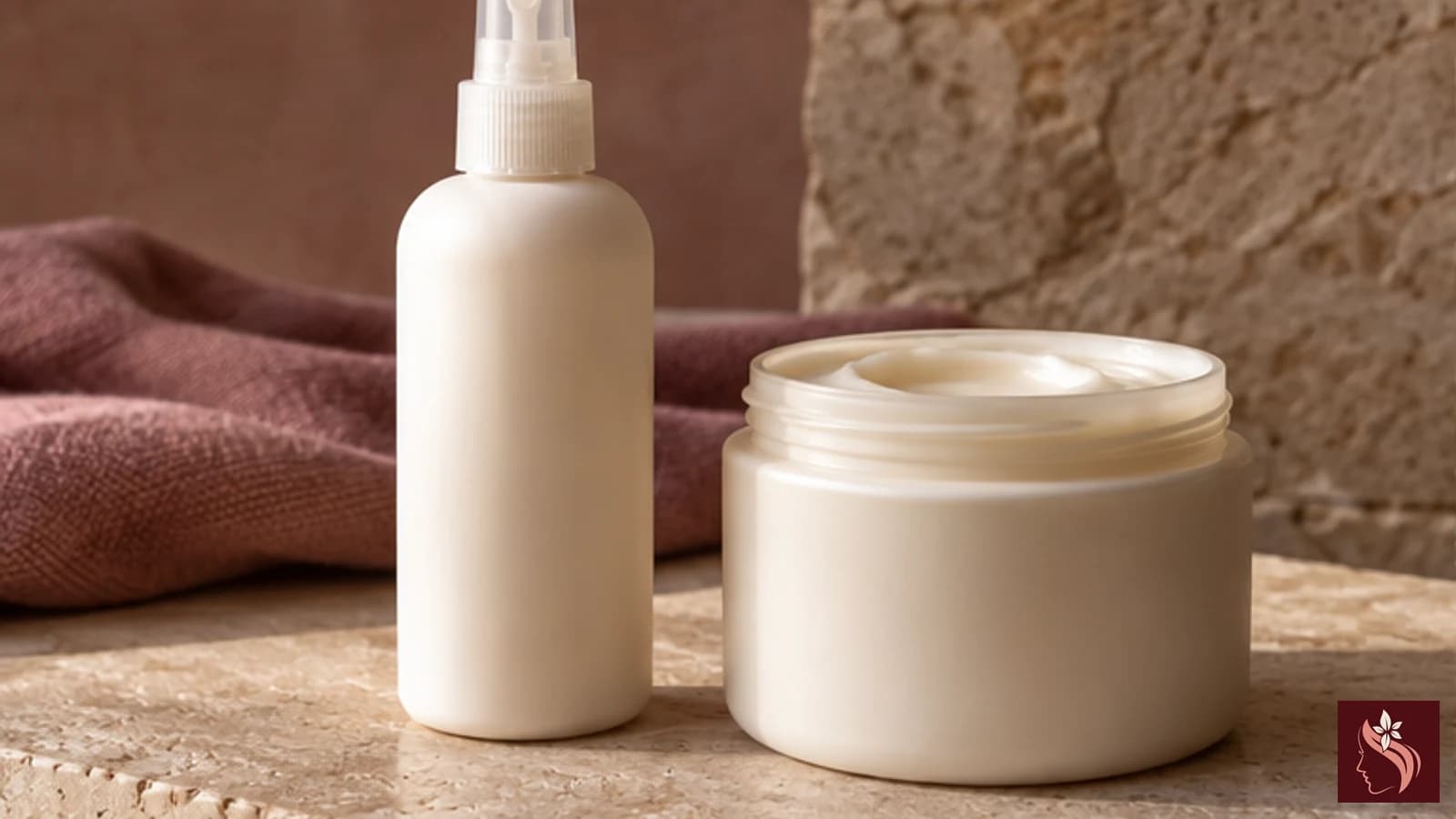
If a label says to use a small amount, start with its instruction rather than layering more because hair still feels different from a generated image or a brand's campaign. If the product must be rinsed, do so as directed. Avoid spraying a leave-in around eyes or inhaling a fine mist; follow all warnings. When two products have overlapping claims, you may not need both. A useful guide helps readers choose the format that fits their routine and desired styling step, including the option to skip either product if their hair is already manageable.
Sources: www.aad.org; www.aad.org
Think about strand characteristics without rigid type rules
Hair can be fine or coarse, straight or textured, low or high density, and short or long; one person can have several of these characteristics at once. A lighter leave-in may feel easier to distribute for some routines, while a richer conditioner may be preferred by others. These are experiences to notice, not universal formulas. The AAD recommends choosing products based on hair type and texture, but those categories do not dictate how much one individual should apply. A better decision begins with the exact directions and your own manageable amount, followed by a small adjustment if the product feels too heavy or does not suit your styling preference.
Curly and coily routines may use conditioner as a detangling aid, but technique matters as much as format. Work in sections if that reduces snagging, use a tool or fingers that feel comfortable, and do not pull through knots. Fine straight hair may have different application preferences, yet it still does not follow a single rule based on a label. Color treatment, relaxers, heat use, climate, and preferred style can further influence the routine. This article cannot tell an individual which formula will work from a curl category alone, and a product photograph cannot validate a suitability claim.
Sources: www.aad.org; www.aad.org
Layering: follow each label and keep the routine simple
A common routine might use a rinse-out conditioner during washing and a leave-in after rinsing, but this is not mandatory. If a manufacturer says products can be layered, follow its sequence and amount. If instructions conflict, do not assume the thinner texture must always go first or that more conditioning improves results. A leave-in can also be a styling base, so adding a separate cream or oil may change the feel without being necessary. Change one step at a time if you are trying to understand your own routine; changing shampoo, conditioner, styling cream, and drying technique together makes observations difficult to interpret.
When evaluating buildup, consider the entire routine: how much product is used, how often it is reapplied, and how thoroughly the cleanser is rinsed. Do not diagnose buildup from a single texture observation, and do not use a strong cleanser to solve a problem without checking its instructions. If a product causes irritation or an adverse response, stop using it and seek appropriate advice. A routine that feels easy, uses clear instructions, and does not require many purchases may be better suited to a reader than a multi-step system sold as essential.
Sources: www.aad.org; www.aad.org; www.aad.org

Compare the ingredient list and maker claims with care
The ingredient list can show what the manufacturer discloses, but it cannot by itself establish how a conditioner will feel on every strand or whether it repairs damage. Do not make allergy-safety assurances from a short ingredient review, and do not label an item safe for a skin or scalp condition without qualified evidence. If you discuss fragrance, proteins, oils, or other named ingredients, explain the scope of the information and cite a reliable source. Avoid a simplistic 'good ingredient versus bad ingredient' rating. Formula performance depends on the whole composition, use, and individual experience, and public information may not disclose every concentration.
For a product comparison, make a table with exact product and variant, date checked, size, format, rinse instructions, application guidance, maker's stated purpose, warnings, and source link. Use 'not stated' where the manufacturer page does not answer a question. Separate factual label transcription from editorial interpretation. If an article later includes a hands-on trial, record who tested, what exact product was used, the method, timing, and relevant limitations. The publisher's testing-policy statement is not evidence that a particular conditioner has been personally used; the evidence status should remain specification-based until such a record exists.
Avoid treating a high position in an ingredient list as a complete formula analysis or proof that a product will work better. Ingredient disclosure can help a reader compare what is named, but it does not reveal every formulation detail needed to predict a personal result. Similarly, a product's scent, viscosity, or package pump can affect convenience without establishing efficacy. Use plain language to separate observed package facts, maker claims, and reader preferences. If a brand changes its product page or removes a claim, update the article rather than carrying forward copy from an old retailer listing or archived social post.
Sources: www.fda.gov; www.aad.org
Choose the format that fits the task you actually have
A rinse-out conditioner may fit a wash-day routine where you want a step that is removed before styling. A leave-in may fit a routine where the label permits remaining product for detangling or styling. Those are format functions, not rankings. If your goal is detangling, check whether the maker describes that use and how it instructs you to apply the product. If you want a styling hold, look for a styling product rather than expecting a conditioner to provide a result it does not claim. A practical shopping choice is one that answers a specific routine question, has clear directions, and fits the reader's preferences and budget.
The merchant's listing should be used for current pricing and availability. Brand and product pages can change, package sizes can vary by market, and the same name may point to more than one formulation. Affiliate links belong only next to an exact, relevant recommendation with the required disclosure. If no exact product is being recommended, this article can teach the format difference without inventing a partner match. A no-buy conclusion can be useful too: a person who already has a conditioner that suits her routine may not need to add a leave-in just because a guide presents both formats.
Sources: www.aad.org; www.aad.org
Conclusion
The essential distinction is what the exact label tells you to do: rinse the product out or leave it in. Compare application, placement, amount, warnings, and maker-stated purpose, then choose the format that fits your routine. Hair texture can inform preferences, but it cannot predict results for every person. Treat repair and performance wording as product claims, and do not present this specification-based guide as a hands-on conditioner review.
Frequently Asked Questions
Can I use leave-in and rinse-out conditioner together?
Some routines use both, but it is optional. Follow each exact product's directions and avoid layering more products than you need.
Do I rinse leave-in conditioner out?
A leave-in is intended to remain in the hair when its exact label says so. Check the directions and warnings for your product rather than relying on the category name alone.
Can conditioner repair damaged hair?
Do not assume a cosmetic conditioner reverses structural damage. Describe only the maker's substantiated claims and keep product-specific evidence clear.
Is leave-in conditioner suitable for every hair type?
No single formula can be promised to suit everyone. Compare the maker's stated hair guidance and directions, then consider your own routine and preferences.
Sources
- www.aad.org (checked 2026-10-28)
- www.aad.org (checked 2026-10-28)
- www.aad.org (checked 2026-10-28)
- www.aad.org (checked 2026-10-28)
- www.fda.gov (checked 2026-10-28)