

Treat fit names as seller language, then inspect the garment
Straight, wide-leg, bootcut, flare, tapered, slim, relaxed, and barrel are common words in jeans listings, but the exact shape can vary from one maker to another. They are descriptions, not a universal measurement standard. Start with the seller's definition and product photos, then check the garment's listed dimensions and fabric information. A retailer's 'straight' may have a different leg opening or thigh width from another label's straight jean. Do not rank one cut as universally flattering or suitable for a particular body shape. The useful fit is the one the shopper prefers and can move in comfortably.
Compare the exact product rather than relying on a category filter. Record the name, wash, rise, leg shape, length, size chart, available inseams, fabric composition, stretch wording, closure, and date checked. If the page does not provide a measurement, say it is not stated. A model's height and worn size can offer context when the seller supplies it, but a styled photo does not establish the garment's actual width or fit on another body. This guide explains what to look for; it does not contain hands-on fitting feedback for any named jean.
Sources: www.primark.com; www.brooksrunning.com
Understand rise labels and where the waistband sits
Rise commonly describes the distance from the crotch seam toward the waistband, but seller measurement points and low, mid, or high-rise terms may differ. Check whether the item page gives a front rise, back rise, or a descriptive label only. If a number is provided, record the unit and whether it is garment measurement. A labeled high-rise pair can sit differently depending on the wearer, the jeans' construction, and where the waistband is designed to rest. Do not infer the rise from a model image or assume two brands use the same threshold for mid-rise.
The rise can affect how a waistband feels when sitting, bending, or tucking in a top. If you have a pair that fits the way you like, measuring its rise can provide a rough point of comparison, provided you use the same garment-measurement method. Keep that number separate from a body measurement. If a product page omits rise and the feature is important to you, ask the merchant or choose a listing with a clearer specification. Labels such as tummy control, sculpting, or shaping should be attributed to the maker and not repeated as a verified body effect.
Sources: www.primark.com
Compare waist, hip, thigh, inseam, and leg opening
A pair of jeans has several dimensions that influence the silhouette: waistband, hip, thigh, rise, inseam, and leg opening. A product page may provide only some of them. For a straight or wide-leg style, thigh and leg opening can help distinguish the cut; inseam and outseam can help you understand length, if the maker clearly defines those measurements. Size charts can describe the intended body measurements rather than the jeans themselves. Read the page carefully and do not combine values from a generic brand chart with measurements from a different product unless the maker explicitly says they apply.
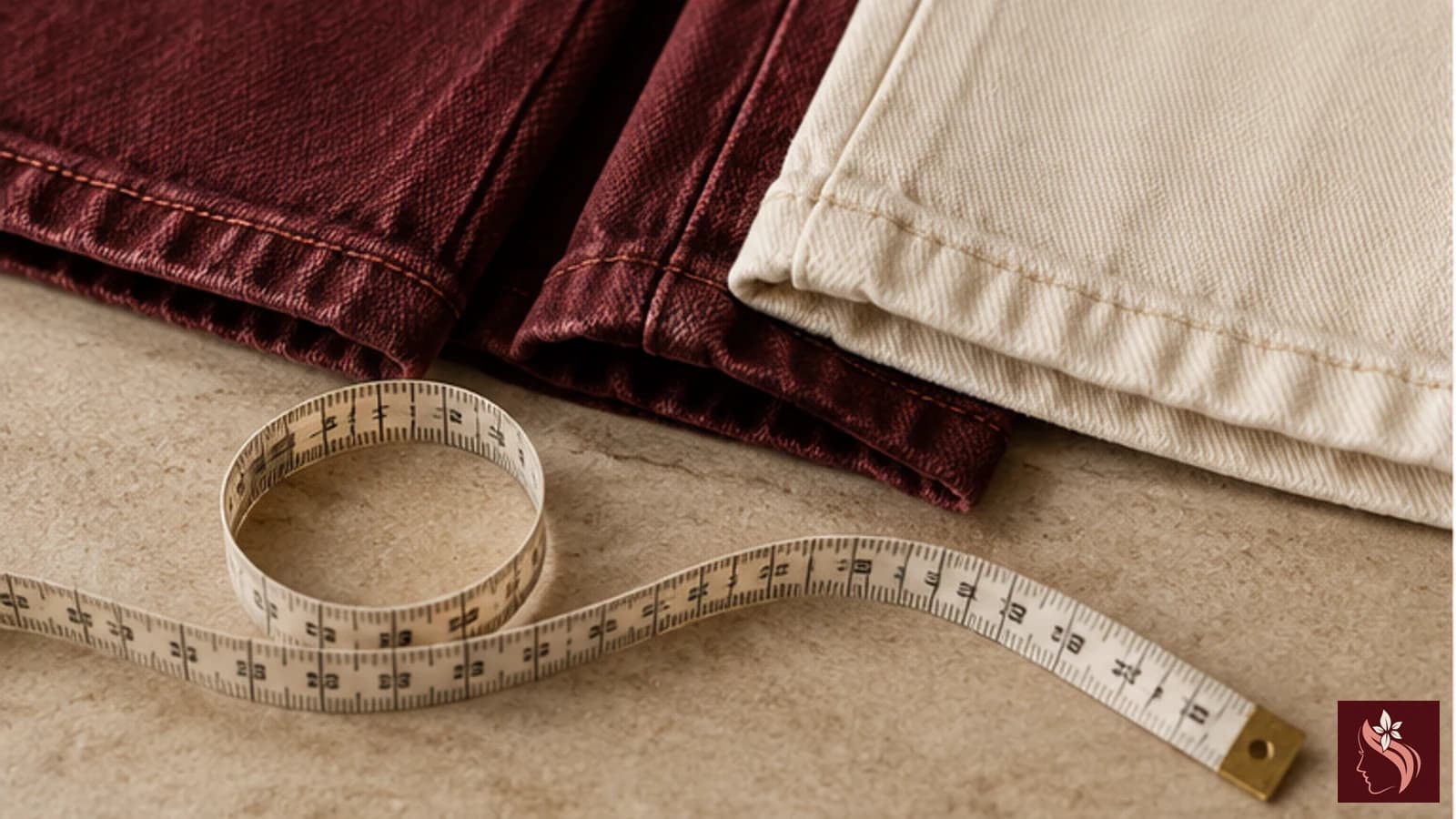
Compare finished-garment measurements with a pair you own if the method and fabric are similar. Lay the existing pair flat, smooth it without stretching it, and follow the seller's measuring reference if provided. A garment measurement is not a prediction of how the item will fit on a body because ease, rise, fabric recovery, construction, and preference matter. If the seller has a product-specific model note, use it as context only. Do not claim that the jean is true to size for everyone based on a single review or an image.
Sources: www.primark.com; www.brooksrunning.com
Read denim fiber and stretch information
Look at the listed fiber composition and whether the brand describes the denim as rigid, stretch, or another finish. The FTC explains that most covered textile products disclose fiber content and origin. Those disclosures tell you what fibers are named, but they do not guarantee softness, durability, recovery, or comfort. The amount and type of stretch fiber, weave, fabric weight, wash treatment, and garment construction can all affect how denim feels. If the listing omits composition or a meaningful detail, treat it as unknown rather than assume that two jeans labeled denim will behave the same way.
A stretch claim is not a numeric performance guarantee unless the maker defines the measurement and conditions. Likewise, words such as comfort, sculpt, or shape are marketing descriptors that need evidence before being presented as factual results. If a brand supplies a test method or percentage, copy the exact unit and context and attribute the statement. A person may prefer rigid denim for one look and flexible denim for another; this is a style choice, not an objective hierarchy. For an article with exact products, verify the current wash and composition because variants can differ within one cut name.
Sources: www.ftc.gov; www.ftc.gov
Use a consistent try-on checklist
If you can try jeans in person or order from a merchant with a clear return policy, check them in positions you use during a normal day. Stand, sit, bend, and walk; note whether the waistband, rise, thigh, and hem feel as you prefer. Check pocket placement and closure. These are personal observations, not a guarantee that the same style will fit another shopper. If you are shopping online, use the product's exact size chart and dimensions, then compare the merchant's fit notes and return window before ordering. Ordering multiple sizes is only practical if the returns process and budget make sense for you.
When recording a fit test for publication, the editor would need the exact product variant and size, tester context, method, date, and fit observations. Until a documented test exists, the product-testing box is a publishing-policy statement and this guide remains specification-based. Do not write 'we tried it' based only on a size chart, a retailer review, or a model wearing the jeans. Keep fit feedback distinct from specifications. If several products are compared, use the same checklist and record where information was unavailable so the reader can evaluate the limits.
Sources: www.primark.com; www.brooksrunning.com
Choose a cut by preference and outfit context
Think about what you want the jeans to do with the shoes and tops you already own. A longer wide-leg hem may pair differently with flats than a cropped straight leg; a tapered ankle can show more of a shoe; a flare may need a particular hem length. These are styling possibilities, not rules about body type or age. Compare the seller's inseam and styling image, and consider whether the garment can be altered without changing its shape. The right choice may be a familiar cut you already wear, a new shape you want to explore, or no purchase at all.
Color wash and finishing can also change an outfit. A listing may describe dark, medium, light, distressed, or coated denim, but shade names are seller conventions and can render differently across screens. Check the exact product photography and return details. Avoid claims that one wash looks slimming or is more appropriate for a body category. If you care about fading or care, read the garment's tag and manufacturer instructions. Fiber, wash process, dye, and care method interact, so do not promise that a denim item will keep its color under a method not specified on its label.
Sources: www.ftc.gov; www.primark.com
A comparison table that answers the shopper's question
A useful jeans table can include product name, seller-defined cut, rise term and measurement if given, inseam options, leg opening if disclosed, size chart type, fiber composition, stretch wording, care instructions, fit notes, and date checked. Add the official product URL and a note for missing fields. This shows readers exactly what can be compared instead of declaring an unsupported winner. If current merchant price is shown elsewhere, it should be dated and sent back to the merchant for the latest amount; Her Glamness normally leaves live pricing to the merchant. Affiliate disclosure belongs adjacent to any monetized recommendation.
Keep the product records current. A new wash or length may have different material details; a seller can remove a size or revise a chart. When the exact linked variant is no longer available, remove or replace it only after checking another exact item. Do not redirect an old product recommendation to a generic jeans page and retain the old description. A practical guide can stay useful without a ranked list by teaching readers to compare their own criteria across current listings. This also protects the page from becoming stale as seasonal colors and inventory change.
Sources: www.ftc.gov; www.primark.com
Conclusion
Compare jeans by the seller's exact cut and rise descriptions, garment measurements, size chart, fiber details, and care instructions. Those data help narrow options, but no size label or model image guarantees fit. Use a consistent personal checklist, verify the exact variant and current listing, and describe fit as tested only after a documented hands-on review.
Frequently Asked Questions
Are women's jeans sizes standardized?
Do not assume one label maps identically across brands or styles. Check the chart and measurements for the exact product.
What is the difference between body and garment measurements?
Body measurements describe a wearer; garment measurements describe the finished jeans. Read the seller's chart legend before comparing.
What does high-rise mean in jeans?
It is a seller-described rise category. Check the exact product's measurement or definition because terminology can vary.
Does stretch denim always fit more comfortably?
Not for everyone. Fiber composition, construction, fit preference, and use all matter; a stretch label is not a universal comfort guarantee.
Sources
- www.primark.com (checked 2026-10-28)
- www.brooksrunning.com (checked 2026-10-28)
- www.ftc.gov (checked 2026-10-28)
- www.ftc.gov (checked 2026-10-28)