

The right comparison starts with your styling goal
Air-drying means letting hair dry without a hot styling tool; diffusing uses an attachment on a blow dryer to distribute airflow around curls. The practical choice depends on time, equipment, the finish you want, and the instructions for any styling products and dryer. Neither method is best for every person or every wash day. The American Academy of Dermatology warns that excessive heat can damage hair and recommends lower heat and less frequent styling with hot tools. That guidance supports reducing unnecessary heat, but it does not prove that every air-dry routine produces healthier hair than every diffuser routine.
Think about the whole process rather than just the last tool. How long do you have? Does your hair feel comfortable drying on its own? Do you want more root lift, less disruption to curl grouping, or a particular shape? Does a product label say to style on damp hair, and do you have a device whose manual explains diffuser use? These questions help a reader choose without converting a personal result into a rule. Hair length, density, curl pattern, climate, and personal schedule can all change the experience. A flexible routine leaves room to use one method on some days and another on different days.
Sources: www.aad.org; www.aad.org
Air-drying: time and technique tradeoffs
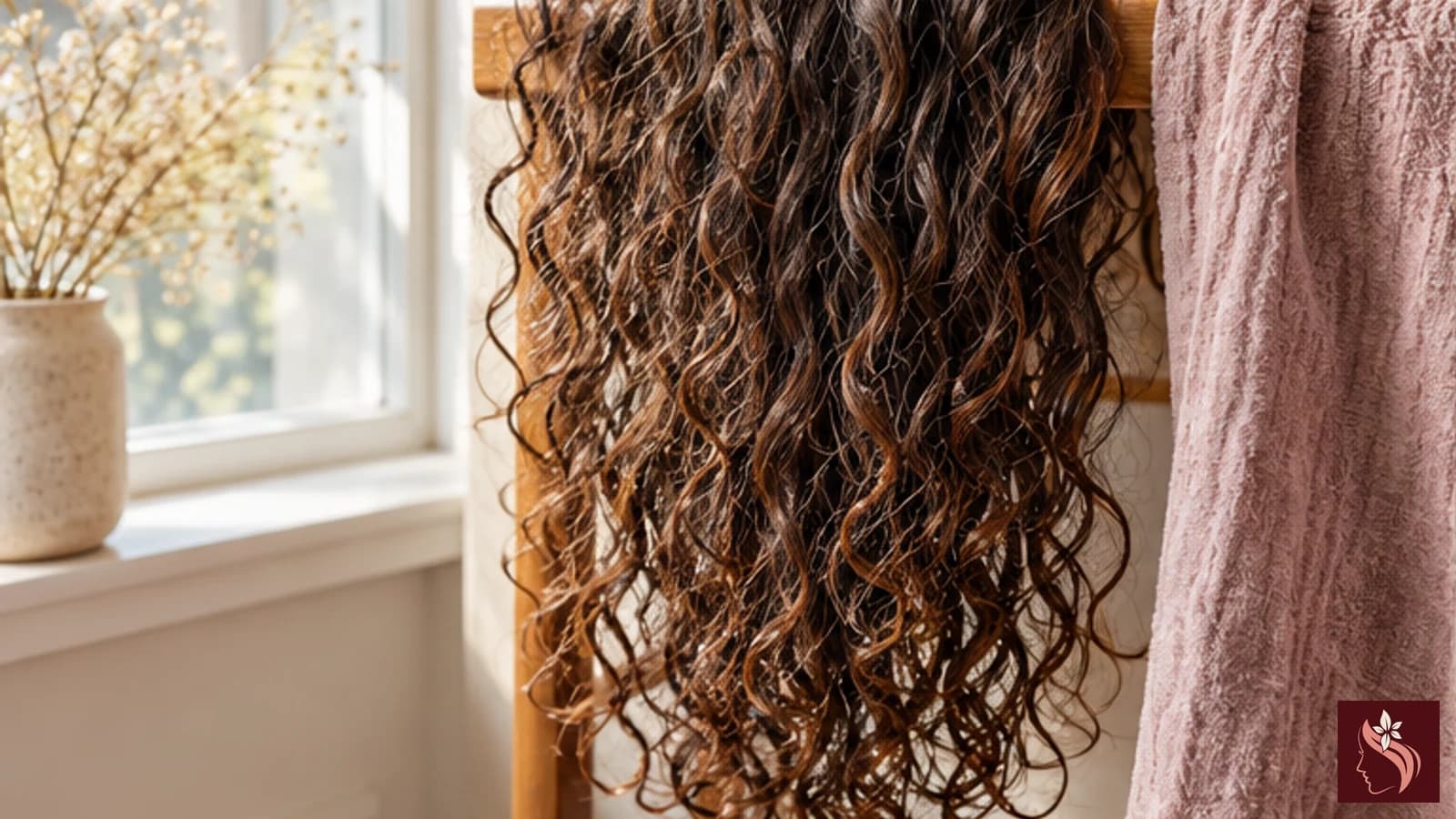
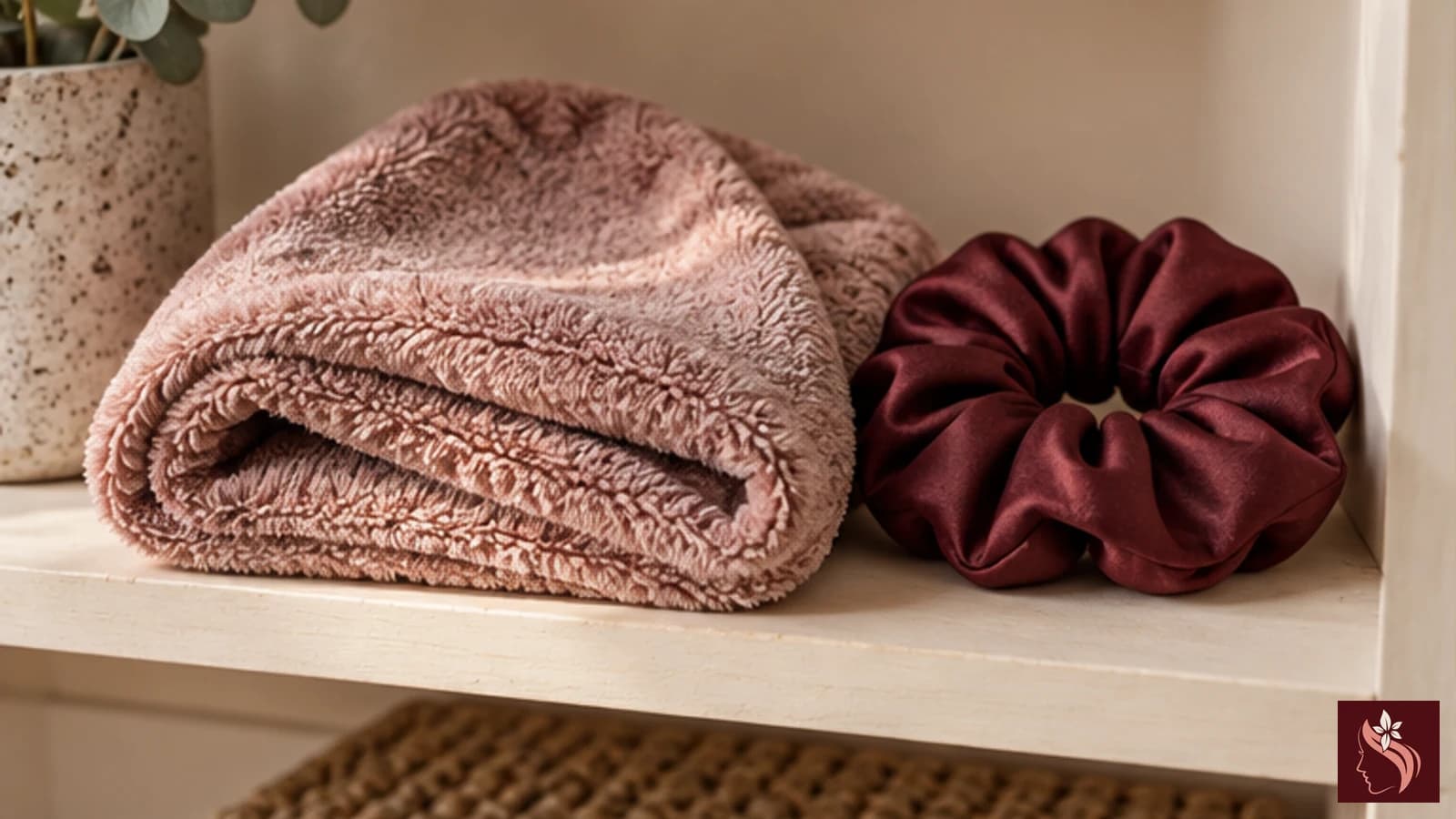
Air-drying needs little equipment and avoids direct hot-tool exposure. It can be a convenient choice if you have enough time and like the way your curls settle as they dry. It may take longer for dense or long hair, and it can be awkward when you need to leave home quickly. Drying time alone does not prove the hair has a particular porosity or health status; room humidity, hair length, density, product amount, and style also matter. Avoid rubbing hair vigorously with a towel. A gentle blot or a material and technique you find manageable can reduce unnecessary tugging, but no towel can guarantee damage-free hair.
For a more defined shape, some people apply styling product to wet or damp hair and then leave curls undisturbed while they dry. Follow the product directions, because not every formula has the same application state or styling purpose. Avoid touching the curls repeatedly if that disrupts your chosen finish, but do not treat hands-off drying as a health rule. If the scalp or hair stays uncomfortably damp for a long time, consider whether another approach fits your schedule and comfort. A guide should not imply infection, damage, or another clinical outcome based only on drying time; those concerns require qualified evidence.
Sources: www.aad.org; www.aad.org
Diffusing: controlled airflow and careful heat use
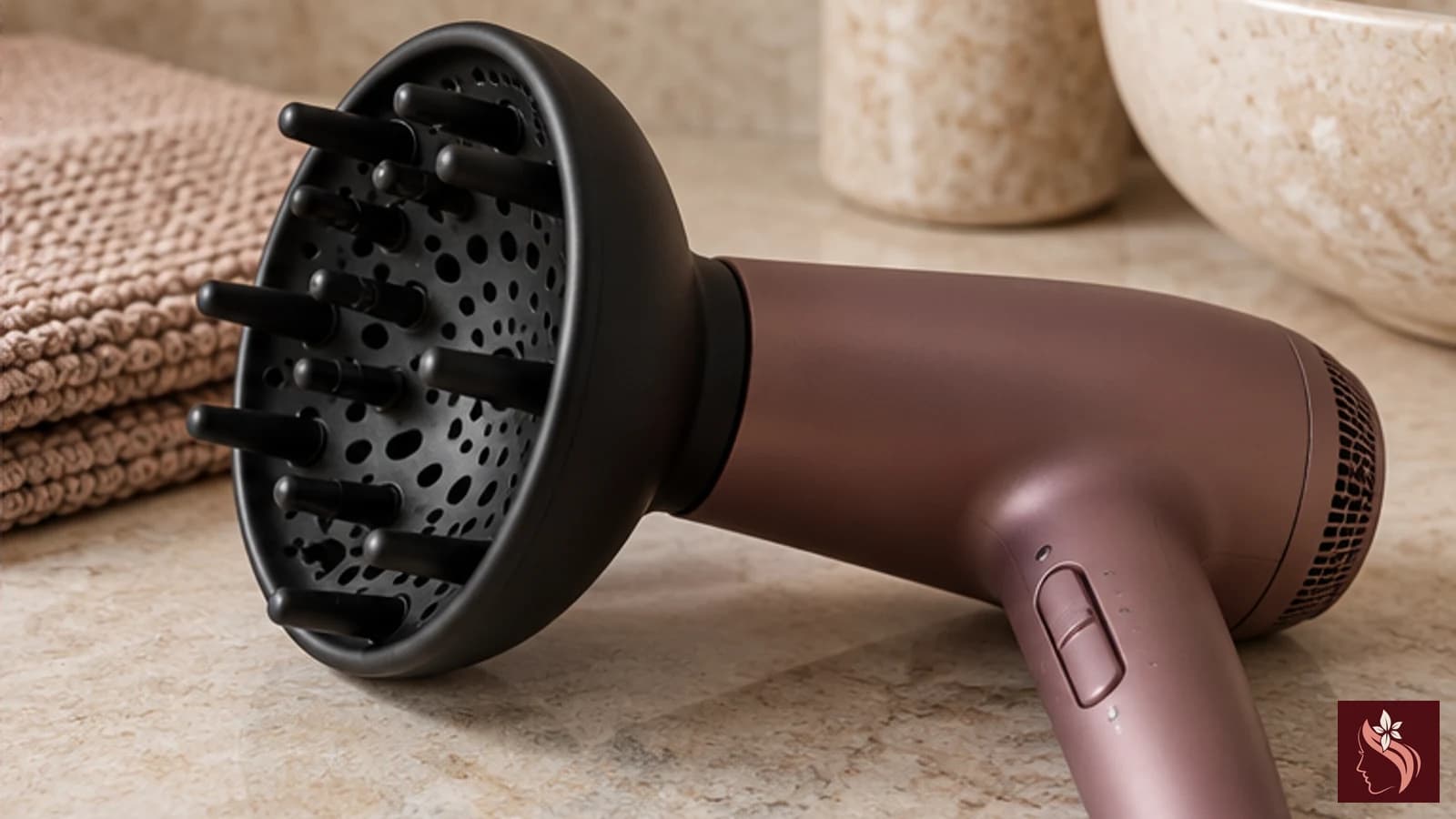
A diffuser attachment spreads airflow differently from a concentrated nozzle and can help a person dry curls while shaping them. Check the dryer manufacturer's manual for compatible attachments, settings, distances, cleaning, and other cautions. Start with the lowest heat and airflow that work for your styling plan, and do not exceed what the device manual permits. The AAD advises using lower heat and less frequent styling because excessive heat can damage hair. The source does not give one correct diffuser setting for every model or texture, so the article should not invent a number or claim that a particular temperature is universally safe.
A common technique places curls gently into the diffuser bowl or holds the attachment near a section, but the right movement depends on the device and desired style. Avoid pulling the hair taut or repeatedly disturbing a section if that creates unwanted stretching. Keep the appliance in good condition and do not block air openings. Follow safety guidance in the manual, especially around water, hot surfaces, and electrical components. If you use a heat protectant, apply it exactly as directed; it is not a guarantee against all damage and does not supersede tool instructions. Let any product that must dry before a hot tool do so before styling.
Sources: www.aad.org; www.aad.org
Compare the results you care about, not a universal winner
Some people prefer air-drying for simplicity, while others prefer diffusing because it fits their morning schedule or styling goal. A useful comparison asks what the reader values: time, lift, curl grouping, convenience, tool cost, or fewer heated styling steps. These are personal criteria, and generated photos cannot prove that one approach creates a certain level of definition or volume. To make an editorial comparison more useful, explain the process, state how the images were made, and avoid presenting simulated curls as a tested result. A before-and-after claim would require controlled evidence and proper disclosure; this guide does not provide one.
A small personal log can help you compare methods: note the product directions, approximate drying time, tool settings, weather, technique, and whether you liked the finish. Use the same product and similar sectioning when you compare, changing one factor at a time. Such a log represents your own observations, not a controlled study or a guarantee for other readers. If an editor conducts a formal hands-on test, document the exact device and product, hair characteristics relevant to the method, protocol, dates, and limitations. Until then, product and device coverage remains specification-based and should say so plainly.
Sources: www.aad.org; www.aad.org
Make the styling products fit the method
A leave-in, gel, foam, or cream may be used for a specific purpose if its manufacturer directions allow it. The word curl on a package does not establish the ideal order or amount. Read whether the formula is for wet or damp hair, whether it stays in, and whether it has a heat-related statement. Apply only the instructed amount and avoid layering multiple products because a routine video did. A product's claim about hold, frizz, softness, or heat protection needs to stay attributed to its maker and its exact variant. It should not be transformed into a universal result for a curl type.
The routine can also work without a new purchase. If an existing styler performs the task you want and its directions fit the technique, keep using it. If you compare products, record the exact item, market, size, official directions, and the date checked; use the merchant's listing for current price and availability. An affiliate link should lead to a relevant product and be disclosed in context. Do not recommend a branded dryer or tool based on the editorial photo alone. If a named tool appears in a comparison, verify its exact model and manual, and separate the official specifications from any test observations.
Sources: www.aad.org; www.fda.gov
Adjust for curl patterns, length, and daily routine
Hair diversity matters in how a technique feels. Short waves, long loose curls, and dense coils can have different drying times and shaping preferences. A single image cannot represent every texture or be used to assign health, porosity, or heat tolerance. In a routine, consider sections, how much product is applied, whether the hair is stretched or allowed to shrink, and how much time you have. These are adjustable decisions, not a ranking of which texture is easier or healthier. If a service, medication, or clinician's instruction changes your care, prioritize that individualized guidance.
A person with a protective style may use a different drying setup from someone wearing curls loose. Ask a stylist about drying around a specific style or service when the general instructions do not answer the question. For all methods, minimize forceful handling and use products only as labeled. If you notice a painful scalp, sudden shedding, or persistent irritation, a styling comparison cannot determine the cause. Seek a qualified professional. We can make a guide inclusive by showing varied real-looking textures without implying that each model demonstrates a particular result or belongs to a single rule-based hair category.
Sources: www.aad.org; www.aad.org
A simple decision checklist
Choose air-drying when it fits your time, comfort, and desired styling result, and when you can let the hair dry without repeatedly disturbing it. Choose diffusing when you have an appropriate attachment, understand the device controls, and prefer the process enough to use it carefully. If you diffuse, follow the manual, use a lower workable setting, and avoid unnecessary repeated heat. If the outcome is not what you want, change one variable next time rather than changing the product, technique, and temperature together. That makes your own observations easier to understand without pretending to run a formal product test.
Use label language and device specifications as the factual base of a product comparison. Record whether a temperature or mode is actually disclosed; if not, say it is not stated. Never claim that a method prevents all damage, works for every curl pattern, or guarantees a photo-like finish. If a reader wants an individualized plan for a treated or fragile style, direct her to a stylist who can assess the actual hair. A useful article gives enough practical detail to make a choice while leaving space for personal preference and source limitations.
Sources: www.aad.org; www.aad.org
Conclusion
Air-drying and diffusing are two styling approaches with different tradeoffs in time, equipment, heat exposure, and preferred finish. The AAD cautions against excessive heat, but the evidence does not establish one universally superior method for every curl. Follow the dryer and product directions, use heat sparingly and at a lower workable setting, and choose the process that fits your routine without treating an illustrative image as a product test.
Frequently Asked Questions
Is air-drying healthier than diffusing?
Not as a universal rule. AAD guidance warns against excessive heat; individual technique, device instructions, hair characteristics, and time also matter.
What diffuser heat setting should I use?
Follow the exact dryer manual and use the lowest setting that fits your styling goal. Do not assume one temperature is right for every appliance or person.
Can I diffuse soaking-wet hair?
Check the instructions for the styling products and dryer you use. Product directions may specify wet or damp hair, while the appliance manual governs safe device use.
Does a heat protectant make diffusing damage-free?
No. A heat protectant is not a guarantee against all damage and does not override the product label or tool manual.
Sources
- www.aad.org (checked 2026-10-28)
- www.aad.org (checked 2026-10-28)
- www.aad.org (checked 2026-10-28)
- www.fda.gov (checked 2026-10-28)