

Start with the job your wash day needs to do
A curly wash day is not a universal sequence that every person with waves, curls, or coils must copy. It is a set of choices: when to detangle, how to cleanse the scalp, where to put conditioner, what styling step fits the desired finish, and how much time is available for drying. Hair length, density, strand size, scalp oil, protective styling, chemical services, activity, and personal preference can all change what feels manageable. The American Academy of Dermatology (AAD) advises choosing hair care based on hair characteristics and washing when hair gets dirty or oily. That is a useful starting point, not a diagnosis or a guarantee that a named curl pattern needs one specific product.
Before wetting your hair, decide whether the priority today is cleansing, removing shed hair, refreshing a style, preparing for a protective style, or simply getting through a busy week. If you have a scalp condition, recent procedure, prescribed treatment, or stylist instruction, follow that individualized advice. This guide offers a flexible cosmetic routine and does not treat scalp symptoms. A routine can be shorter than a social-media checklist: a cleanser, a conditioner if desired, and a styling choice may be enough for some wash days. Keep products that already work in rotation rather than buying a complete new shelf because a routine chart says so.
Sources: www.aad.org; www.aad.org
Choose a detangling moment that suits your hair
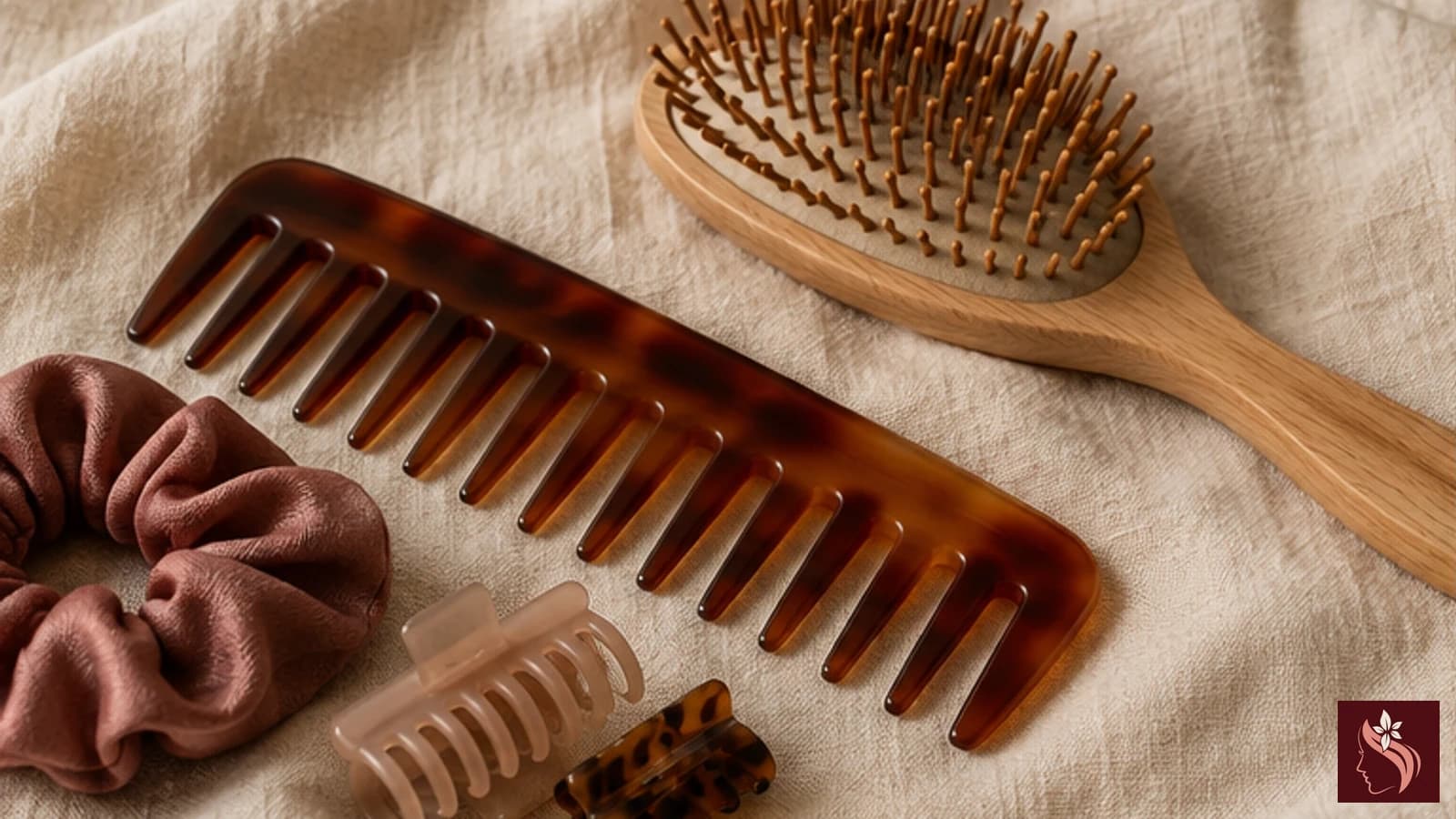
Detangling can happen before shampoo, while conditioner is in the hair, or after washing, depending on the product directions and what your strands tolerate. The AAD notes that curly or textured hair may be easier to detangle when wet and conditioned, while other hair types may need a different approach. Treat that as a texture-aware cue rather than a rigid rule. If detangling dry hair causes snagging, try working in smaller sections with a slip-providing conditioner whose label permits that use. If your product is rinse-off, keep it within the stated use instructions and rinse as directed. A wide-tooth comb, fingers, or a brush designed for wet detangling are options, not requirements.
Begin at the ends and gradually work toward the roots so a knot is not pulled tighter along the length. Hold the section above the tangle to reduce tension at the scalp, and pause if the tool catches. Do not yank through a knot or treat shed strands as proof that a product has failed: hair naturally sheds, and tangles can make shed hair more noticeable. A sectioning clip can help you keep track of finished areas, but avoid pulling sections taut. If a style is matted or removal is painful, a professional stylist can give safer, situation-specific help than a generic tutorial.
Sources: www.aad.org; www.aad.org
Cleanse the scalp without turning shampoo into a length scrub
Read the shampoo label before applying it. Many shampoos are intended for the scalp, with the lather rinsing through the lengths; the exact method varies by formula. AAD guidance says to concentrate shampoo on the scalp and avoid piling or rubbing hair lengths together, which can create friction. Use the amount and frequency that fit the product instructions and your scalp's oil and soil level. If you use gels, oils, dry shampoo, or other styling products, what you need on a particular wash may differ from a low-product week. Product buildup is not something to diagnose from a single rough-feeling wash, and repeated harsh cleansing is not automatically the answer.
Work with the pads of your fingers rather than nails, and give the scalp attention without scratching. Rinse thoroughly according to the product's directions. Some routines use one shampoo application and some use more than one, but the number should not be converted into a universal rule. If your scalp feels persistently itchy, painful, very flaky, or unusually irritated, do not keep escalating clarifying products based on this article. Ask a dermatologist or another qualified clinician about ongoing symptoms. For color-treated or chemically processed hair, look at the exact product's instructions and ask the service provider what timing or cleanser limitations apply.
Sources: www.aad.org; www.aad.org
Condition where it helps your routine
Conditioner is a format family rather than one fixed recipe. A rinse-out conditioner generally has a rinse step; a leave-in is designed to remain in the hair when its label says so. AAD guidance commonly places conditioner through lengths, with placement adjusted to hair texture and needs. Focus on areas that feel harder to detangle or that your own routine tends to dry out; do not assume that every scalp or every strand needs the same quantity. Fine strands may feel weighed down by a rich formula, while thick or tightly textured hair may be easier for some people to handle with more slip. These are preference observations, not diagnostic rules or guaranteed effects.
Follow the exact label for how much to apply, where to apply it, how long to leave it, and whether to rinse. If you use a mask or deep conditioner, do not assume that more time or more product improves the result. Some products have warnings, incompatible uses, or directions tied to a particular hair service. Keep conditioner out of eyes, and stop using a product that causes an adverse reaction. If you switch formulas, change one routine step at a time; doing so makes it easier to tell whether the experience came from the new product, the technique, or another change in your routine.
Sources: www.aad.org; www.aad.org
Style in sections, using the product directions
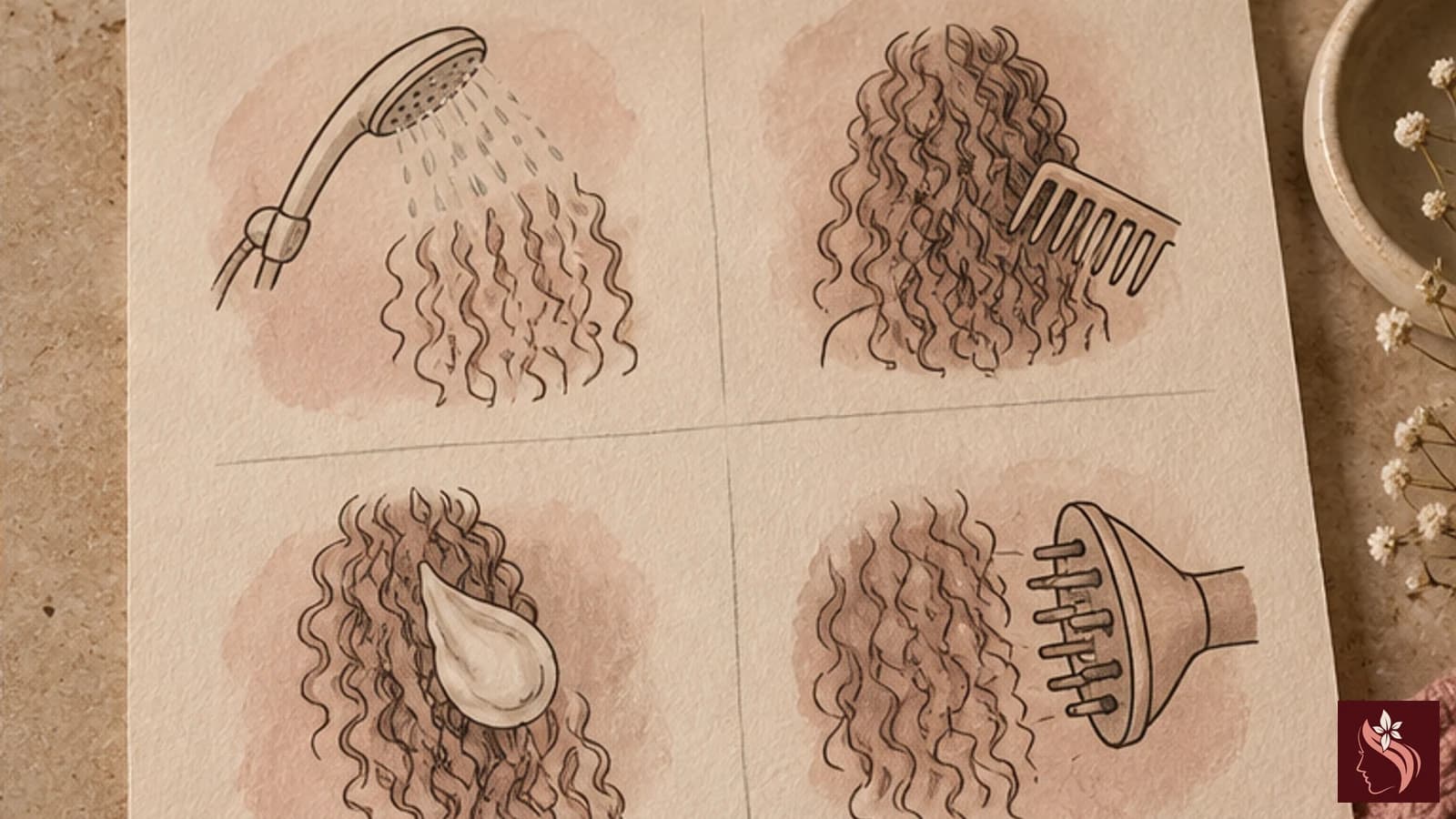
After rinsing, choose whether you want a wash-and-go, a stretched style, a twist-out, braids, or no defined style at all. Sectioning is a practical way to distribute a product and keep track of what has been styled, but the size of each section depends on density, length, dexterity, and time. Apply styling products to damp or wet hair only when the label supports that use. Read whether a product is a cream, gel, mousse, foam, or leave-in, and treat claims such as hold, definition, or frizz control as manufacturer language until a specific product has been independently tested under a described method.
A scrunching motion, smoothing motion, finger-coiling, or brush styling may each produce a different look. None is a required technique for every curl pattern. Use a gentle touch and stop if the process creates uncomfortable pulling. Avoid making a product's ingredient list stand in for evidence of universal results; a name such as curl cream does not establish how one formula behaves on every head of hair. When you compare options, record the exact size and variant, full label directions, any stated hair-type guidance, and the date you checked the official product page. Merchant prices and availability can change, so use the merchant page for current details.
Sources: www.aad.org; www.aad.org
Choose a drying method and a realistic refresh
Air-drying avoids direct hot-tool styling, while a diffuser can help shape or dry curls using a blow dryer. The AAD cautions that excessive heat can damage hair and advises using lower heat and less frequent hot-tool styling. That does not establish that one drying choice is best for everyone. Consider your available time, desired volume, comfort, hair length, and appliance instructions. If using heat, follow the manufacturer's manual, use a lower setting that works for your intended style, and keep the tool moving as its instructions allow. A heat protectant's claim is specific to its own directions and data; it should not be treated as permission to use any temperature for any duration.
Once the style is dry, a refresh might mean leaving it alone, lightly misting with water if that fits your routine, or using a small amount of a product whose label permits refresh use. Avoid repeatedly wetting, brushing, or layering products just to make curls look identical each morning. Protecting the style for sleep with a satin bonnet, scarf, or pillowcase is a common personal preference, not a promise that damage or frizz will be prevented. If a protective style causes pain, tension, or scalp symptoms, remove or adjust it and seek individualized advice. Your comfort is a more useful measure than achieving a prescribed curl chart.
Sources: www.aad.org; www.aad.org
Build two versions: a full routine and a short one
A full wash day can include detangling, cleansing, conditioning, styling, and patient drying. A short version might focus on a scalp cleanse, conditioner according to directions, and a simple style that fits the next few days. Write both versions down using the products you already own. Add the product name and the exact label instruction next to each step, especially when a rinse-off and leave-in product are both in the routine. This prevents a generic tutorial from overriding a package direction. If you are not sure whether an item is meant for wet or dry hair, or whether it should be rinsed out, check its own manufacturer page instead of inferring from its texture or packaging color.
After a few wash cycles, note only observations that matter to you: how long the routine took, whether detangling felt manageable, whether your scalp felt comfortable, and whether the finished style matched your preference. This is not a controlled product test and should not be turned into a universal review. Keep the routine stable long enough to understand it, and adjust only one variable at a time if you want to compare approaches. There is no required product count, curl-type taxonomy, or matching routine formula here. Personal experience may help with your own choices, while product claims and advice for other readers need appropriate evidence and exact sourcing.
Sources: www.aad.org; www.aad.org

Conclusion
A workable curly wash day is a flexible order of decisions: detangle in a way your hair tolerates, cleanse the scalp using the shampoo directions, condition and style according to each product label, then choose an air-dry or heat-assisted method that fits your time and comfort. Use texture and routine preferences as clues, not rules that assign products by curl label. If you mention a specific product, check its exact current directions and keep manufacturer statements distinct from hands-on observations. Persistent scalp symptoms deserve qualified care, not a more complicated wash-day routine.
Frequently Asked Questions
Should I detangle curly hair before or after shampooing?
Either timing can work for different routines. AAD guidance notes that curly or textured hair may be easier to detangle wet and conditioned; follow the exact conditioner directions and use a gentle tool or fingers in sections.
How many times should I shampoo on wash day?
There is no universal number. Follow the shampoo label and consider scalp oil, soil, styling buildup, and any color or service instructions. Do not repeat harsh cleansing to treat ongoing scalp symptoms without professional advice.
Do I need a curl cream, gel, and mousse?
No. A styling product is optional, and product count does not prove a routine is better. Choose a format whose labeled directions fit your style preference and budget.
Is air-drying always better for curls?
Not necessarily. Heat use should follow device instructions and be limited to a setting and frequency you choose; air-drying and diffusing each involve tradeoffs in time, shape, and preference.
Sources
- www.aad.org (checked 2026-10-28)
- www.aad.org (checked 2026-10-28)
- www.aad.org (checked 2026-10-28)
- www.aad.org (checked 2026-10-28)
- www.aad.org (checked 2026-10-28)