
Start with the construction, not the color
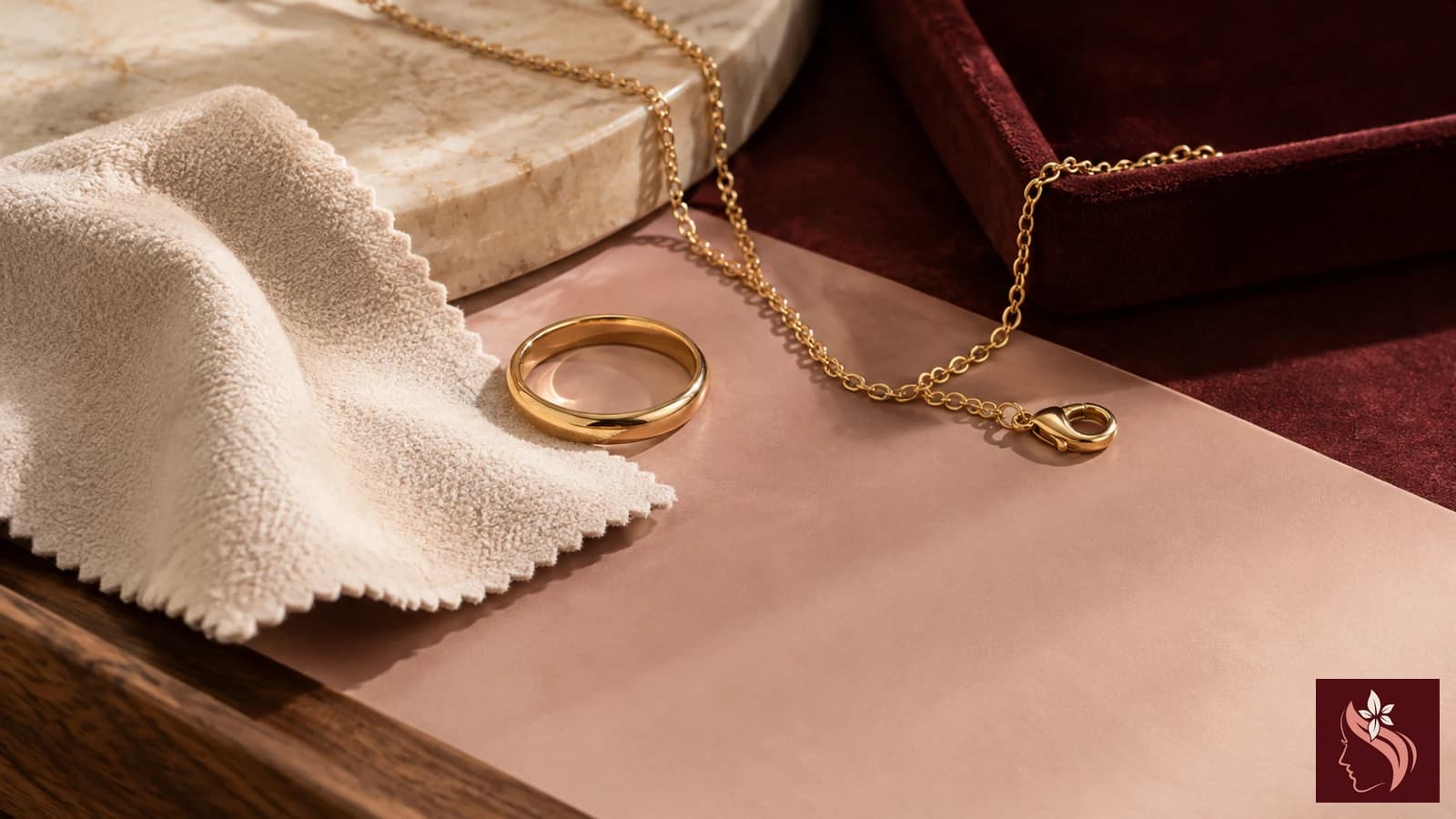
Gold-plated, gold-filled, and vermeil can look similar in a product photo, but the terms describe different construction details. A warm yellow surface alone cannot tell you the base metal, the fineness of the gold layer, how that layer was applied, or how thick it is. Those facts matter when you are comparing listings, thinking about care, or trying to understand what touches your skin. Treat a product photograph as a style reference rather than evidence of composition. The Federal Trade Commission’s Jewelry Guides address how jewelry terms should be used in U.S. marketing; this guide translates that framework into practical questions for an online shopper.
The three terms are not a simple ranking from poor to best. They identify different kinds of gold application or an underlying metal, while the finished piece also depends on design, construction, use, and the seller’s disclosure. Your preference may involve appearance, budget, maintenance, a specific metal, or how often you plan to wear the item. We do not claim that one label predicts a guaranteed lifespan or works for every person. For specification-based coverage, Her Glamness checks available manufacturer and authorized partner information; the testing approach appears in the product-testing box on this article and does not mean these exact jewelry examples were tested.
What gold-plated describes
Gold plating is a surface layer of gold applied over another metal. The FTC explains that jewelry may be plated through different processes, including mechanical plating and electroplating, and that the layer can wear away depending on use and its thickness. A listing that says only “gold plated” may leave important questions unanswered for your comparison: What is the base metal? What gold fineness is used? Does the seller state the plating process or thickness? Is a clear care guide available? If these details are missing, the honest conclusion is that the listing does not say; do not fill the gap with assumptions from color, price, or a close-up image.
Gold flashing and gold washing refer to very thin electroplating, which FTC consumer guidance says wears away faster than gold plate, gold filled, or gold electroplate. That is a term-level distinction, not a forecast for an individual piece. A bracelet exposed to daily friction, moisture, cosmetics, or cleaning products may be used differently from earrings worn occasionally. Keep the maker’s exact words and any defined specifications together when comparing products. If a seller uses a phrase that is not explained, ask what process and material it means. Avoid translating a vague marketing label into a promise that a finish will never change.
Sources: consumer.ftc.gov
What gold-filled and gold-overlay terms mean
In U.S. consumer guidance, “gold filled,” “gold overlay,” and “rolled gold plate” describe jewelry with a layer of at least 10-karat gold mechanically applied to a base metal. The FTC also describes marking requirements and a fractional-weight qualification where the gold layer is below one-twentieth of the total metal weight. That fraction is one reason exact wording matters: a seller’s shorthand may omit a material detail that is relevant to how the piece is described. Read the entire product title, specification panel, and any marks information, then compare the wording with the maker’s official description rather than relying on a marketplace thumbnail.
Gold-filled does not mean that the entire object is solid gold, and it does not disclose every property of the item. The core metal, the alloy in the gold layer, the way the component is joined, and the use pattern still matter. The word “filled” is not a universal durability warranty, so avoid claims like “will last forever” unless the maker supports a precise, applicable promise and its conditions. If a product page uses “gold filled” without identifying the karat or its construction, seek clarification. If none is available, treat the missing detail as uncertainty and compare with a listing that gives clearer material information.
Sources: consumer.ftc.gov
What vermeil means in U.S. guidance
Vermeil is a specific type of gold-plated jewelry with a sterling-silver base coated or plated with gold. The term therefore contains two material ideas: the underlying sterling silver and a gold surface. It does not mean solid gold. When a product is described as vermeil, look for the maker’s statement about the sterling-silver base and any additional construction details that are available. If a listing does not say what the base is, do not infer it from a warm gold color or from the fact that another item in the collection is vermeil.
You may see vermeil described alongside details such as karat or layer thickness. FTC Jewelry Guides set conditions for when particular jewelry terms may be used, and the FTC consumer explanation gives a practical baseline for recognizing vermeil as gold over sterling silver. Our comparison is about U.S. terminology and does not substitute for a current legal review of a seller’s claims. International product pages can use different language or labeling conventions. If you are buying from a cross-border merchant, verify the exact description and the applicable consumer information shown for your market before treating a term as equivalent.
Sources: ftc.gov; consumer.ftc.gov
Compare listings with a consistent checklist
Use the same fields for every item so that a polished product page does not win simply because it contains more lifestyle photography. Record the exact product and variant; the complete material name; the base metal; the gold fineness, if stated; the plating or bonding term; a thickness or proportion, if stated; and the seller’s care instructions. Note where the information appears and the date you checked it. A useful comparison may end with “not disclosed.” That phrase is more accurate than estimating the layer or base metal from a photograph, a reviewer’s comment, or the color of the jewelry.
Next, compare practical purchase terms separately from construction. Check the dimensions, weight if supplied, closure, adjustable range, return window, warranty wording, and who handles repairs. These details do not transform one material into another, but they can change whether a piece suits your intended use. If the item is a gift, allow for uncertainty in size and check the return policy before ordering. For sensitive-skin concerns, material disclosure is a starting point rather than a medical guarantee; the label alone does not establish that a piece is suitable for a particular individual.
Sources: ftc.gov
Care and wear depend on both the finish and your routine
Follow the maker’s instructions for the exact item. Jewelry care can differ by metal, stone, treatment, setting, and assembly, so a generic cleaning hack may be inappropriate. Keep a piece away from products the maker warns against, store it so it does not rub against harder items, and remove it for activities the seller identifies as unsuitable. If no care information is supplied, contact the seller instead of assuming that every plated, filled, or vermeil piece can tolerate the same cleaner, water exposure, or polishing cloth.
A coating may change with wear, but a responsible guide cannot turn that general possibility into a fixed number of years. Frequency of use, friction, how a piece is stored, the thickness and composition of its layer, and the maker’s construction all affect what happens. A product’s warranty or care promise also has conditions; read them rather than repeating an unqualified durability statement. If a change appears, stop using any piece that irritates you and ask the seller or a qualified jeweler about the item. Photographs and generated editorial images in this guide do not demonstrate a tested finish or predict wear.
Sources: gia.edu
A concise decision worksheet
Before you choose, write down what you want to know: Which term does the seller use? What is the base metal? Is the stated construction consistent across the product page and manufacturer record? What care does the maker require? Can you return the item if the details do not match the listing? Then decide which facts are essential for you. A shopper who wants a sterling-silver base may prioritize a clearly described vermeil piece; someone comparing mechanical gold-layer terms may want a filled or overlay description with the stated karat quality. Neither example is a recommendation without a current product record.
If a key field is absent, you have three practical options: ask the merchant, choose a listing that discloses more, or make the purchase knowing that the detail remains unknown. Do not let affiliate links or discount codes replace this comparison. Her Glamness may use affiliate links when the exact current product and its relevance have been checked; the merchant controls availability and current price. This page is a terminology explainer, not a promise of performance, a chemical analysis of any item, or a claim that one construction is best for all wardrobes and budgets.
Conclusion
Gold-plated, gold-filled, and vermeil describe different constructions, not interchangeable shades of gold and not guaranteed lifespans. The most useful next step is to read the full material description, verify the base metal and any stated gold quality or layer information, and follow the maker’s care directions. When the listing is silent, keep that uncertainty visible instead of guessing. Use the FTC’s U.S. terminology as a guide to the claims you encounter, check the exact seller record before buying, and choose based on the information and care routine that fit your needs.
Frequently Asked Questions
Is vermeil the same as gold plated?
Vermeil is a specific type of gold-plated jewelry with a sterling-silver base. “Gold plated” by itself does not identify that base metal. Check the exact listing and maker description.
Is gold-filled jewelry solid gold?
No. FTC consumer guidance uses gold-filled for a gold layer mechanically applied to a base metal. It is not a description of an object made entirely of solid gold.
Does gold plating always wear off quickly?
There is no responsible universal timeline. Wear depends on the specific construction, thickness, use and care. Use the maker’s specifications rather than an unsupported lifespan estimate.
Can a product photo tell me whether jewelry is vermeil?
No. A photo cannot establish the base metal or gold-layer construction. Use written seller or manufacturer disclosures and ask for clarification if a material detail is missing.
Sources
- ftc.gov (checked 2026-10-28)
- consumer.ftc.gov (checked 2026-10-28)
- gia.edu (checked 2026-10-28)