Three terms answer different questions
When a gemstone listing says natural, laboratory-grown, or imitation, the words describe different origins or relationships to a named stone. They are not simply quality grades. Natural stones form through geological processes; a laboratory-created counterpart is manufactured and, when accurately described as such under FTC guidance, has essentially the same optical, physical, and chemical properties as the named natural stone. An imitation or simulant is made to resemble a stone but is a different material and does not share those same properties. The exact material name and context matter, so read the complete description rather than a short title or color label.
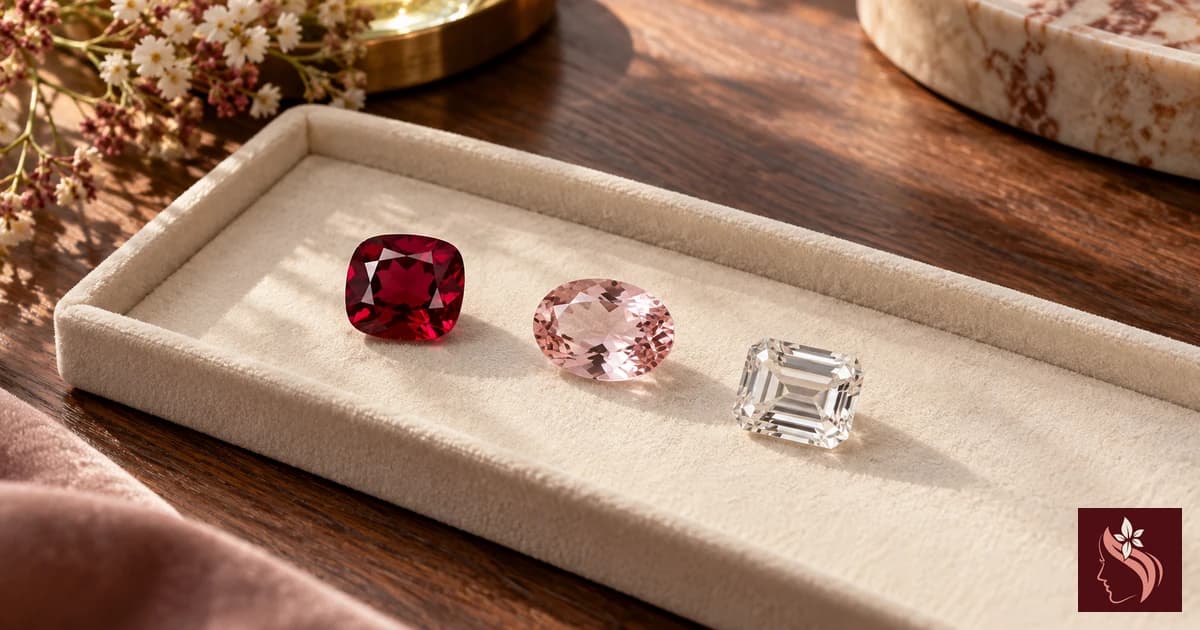
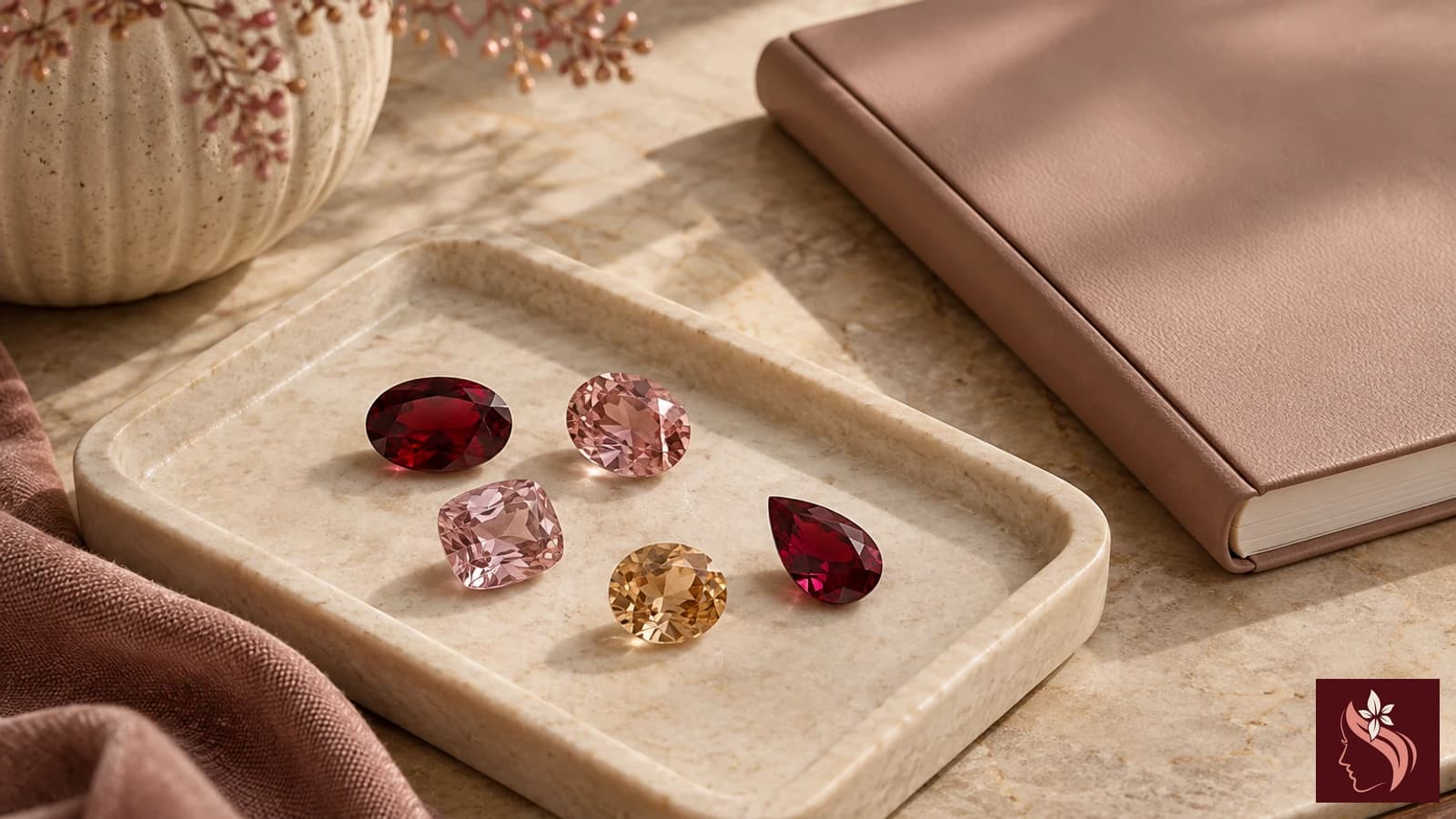
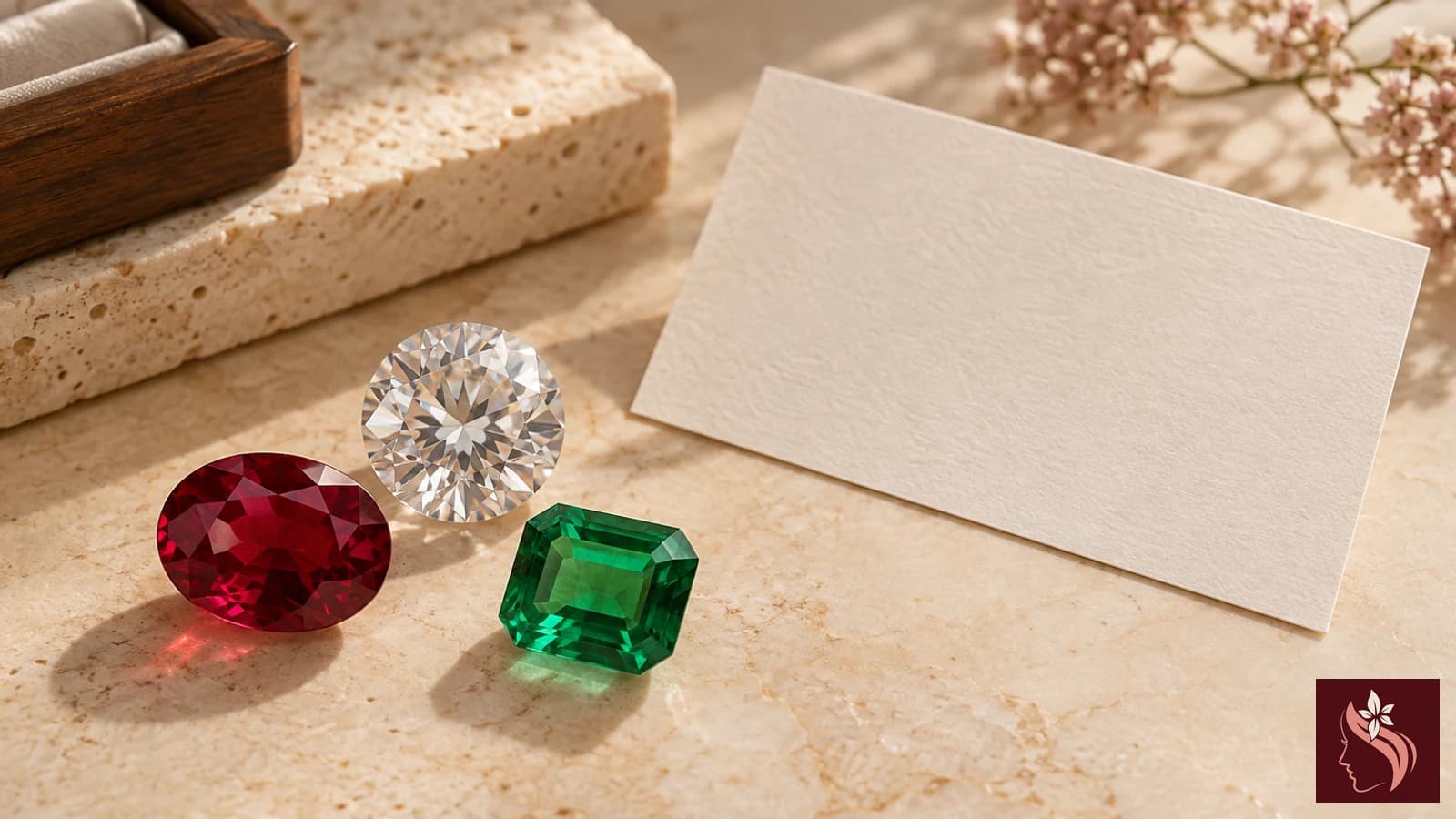
A photograph cannot confirm whether a stone is mined, grown in a lab, imitated with glass or another material, treated, filled, or assembled from multiple components. Even a clear, high-resolution product image is not a gemological examination. FTC consumer guidance encourages shoppers to ask sellers about origin and get important details in writing. Our images here are generated editorial illustrations, not actual stones available for purchase. The required testing-approach box on the page is a publisher statement; it does not claim that Her Glamness has tested or identified any pictured gem.
Sources: ftc.gov; consumer.ftc.gov
What natural means in a product description
A natural gemstone is a stone formed in nature rather than manufactured in a laboratory. That origin does not, on its own, describe color quality, clarity, durability, treatment, cut, rarity, or value. Two stones of the same mineral name can differ substantially across those attributes. If origin matters to your choice, ask how the seller determined it and whether the purchase documents identify the stone and any known treatments. A product page that simply names a gemstone may not supply those details; do not fill gaps by interpreting a saturated color, internal pattern, or studio lighting.
For a higher-value purchase, review the documents and ask whether an independent gemological report is available for the exact stone. Confirm that the report number, item, measurements, and description correspond to the piece being sold. A report is a source of information within its stated scope, not a guarantee of market value, future condition, or every feature a shopper may care about. FTC advice recommends keeping important representations in writing. If a sales conversation includes origin, treatment, or care claims, ask for those statements in the product record or receipt before completing the purchase.
Sources: consumer.ftc.gov
What laboratory-grown or laboratory-created means
A laboratory-created gemstone is manufactured rather than mined, while it may share the essential optical, physical, and chemical properties of its natural counterpart. FTC guidance says qualifying terms such as “laboratory-grown” or “laboratory-created” should clearly disclose that the stone is not mined. The term should appear with the gemstone name in a way that makes its nature clear. Do not assume that “lab” means an imitation, and do not assume that every seller uses abbreviations consistently. Read the maker’s full description and check what specific stone the claim refers to.
Laboratory-created describes origin; it does not automatically answer questions about grading, treatments, cut, setting, chain metal, warranty, or the seller’s return terms. A product might have an exact laboratory-grown stone while its mounting uses a separate metal whose composition needs its own disclosure. Compare each component separately. If a lab report is supplied, see whether it identifies the center stone and whether the item you receive is the same one described. Avoid treating lab-grown as a shorthand for “better,” “more ethical,” or “impact-free”; those are broader claims that require evidence about the specific product and its production.
Sources: search.ftc.gov; ftc.gov
What imitation, simulated, and composite terms tell you
Imitation or simulated stones resemble a named gemstone but are made from another material and do not have the same essential properties as the natural stone. FTC guidance says that the wording should clearly disclose that the product is not a mined or laboratory-created version of the gemstone. “Faux” by itself may not communicate that distinction clearly for gemstones, so look for the exact material and an explicit descriptor. Glass, plastic, cubic zirconia, and other materials can be used to imitate different stones; do not assume a particular substitute unless the seller says so.
A composite, assembled, filled, or treated stone may need additional explanation because the construction or treatment can affect how the product should be described and cared for. FTC guidance has specific cautions for products containing fillers or binders and for disclosures about certain gemstone treatments. The practical reader rule is simple: ask what the stone is made of, whether it is one piece or assembled, what treatment is present, and what care it requires. If an answer is absent or uses several terms without explaining them, keep those facts unresolved rather than turning a marketing phrase into a technical conclusion.
Sources: search.ftc.gov; consumer.ftc.gov
Read treatment and care disclosures as part of the purchase
Some gemstones are treated to change or improve their appearance. FTC consumer advice says sellers should disclose certain treatments when they are not permanent, create special care requirements, or significantly affect value. Ask what treatment was applied, whether it changes how the stone should be cleaned, and whether the seller’s written record applies to the exact item. A treatment can be relevant even when the origin is disclosed accurately. Do not infer that a stone is untreated because no treatment is visible in a photo, and do not use color alone to guess which process was used.
Care requirements can matter more than a label when you plan to wear a piece often. Heat, solvents, steam, ultrasonic vibration, and household cleaners are not safe for every gemstone or setting. GIA’s jewelry-care guidance shows that treatments and material types change cleaning recommendations. Before you buy, check whether the merchant provides a care guide, repair options, and clear return conditions. For any item without an adequate disclosure, ask the seller before purchase. For a valuable stone, consider advice from a qualified gemologist or jeweler rather than attempting an at-home test that could damage it or produce a misleading result.
Sources: consumer.ftc.gov; gia.edu
A listing review checklist for online shopping
Save the full product name and variant, the seller’s exact stone description, its origin term, any stated treatment, measurements or carat weight, the setting metal, care directions, report details, and return policy. Note what is missing. When a seller says “diamond,” for example, check whether it is described as mined, laboratory-created, or imitation and whether the claim is supported by the documents available for that item. The same discipline applies to colored stones. Use exact words, not a paraphrase that silently removes a qualifier such as laboratory-grown or simulated.
If the price is unusually low or the language seems unclear, slow down and ask a direct question: “Is this stone natural, laboratory-created, imitation, or assembled, and what written document confirms that description?” Ask whether the pictured stone is the exact one shipped or a representative image. Review the answer against the product page and your receipt. This does not make you responsible for detecting every inaccurate claim, but written specifics help you compare and raise a concern if the delivered item differs. Her Glamness should only link a current exact listing when its relevant material details can be traced to an authorized product record.
A useful record also separates the center stone from accents and the setting. A ring may have a laboratory-created center with natural accent stones, or an imitation center with a metal mounting described separately. Ask whether a report covers the entire piece or only the center stone and whether the report’s measurements match the product. Confirm the report issuer and identifier directly when possible. A generic certificate is not interchangeable with a report tied to the item. These checks do not establish value, but they help you understand which stone the origin claim refers to and what information remains unverified.
For everyday jewelry, care and repair terms deserve the same attention as origin. Check whether a treatment requires special cleaning, whether the setting can be resized, and what the merchant does if a stone is loose on arrival. Ask if the item is returnable after inspection and whether packaging must be retained. Do not test the stone with heat, household chemicals, scratches, or improvised light filters. Such methods can damage the item and are not reliable substitutes for professional identification. If the seller cannot explain a major material claim, consider a different listing instead of treating uncertainty as proof that the claim is correct.
Sources: search.ftc.gov; consumer.ftc.gov
Conclusion
Natural, laboratory-created, and imitation are different descriptions of a gemstone’s origin or relationship to a named stone. The listing should make that difference clear, and treatment and care information may be just as important. Use written seller disclosures and any report for the exact item; never rely on appearance alone to identify a stone or its treatment. If the listing leaves a key field unanswered, ask the seller or choose a better-documented option. This approach helps you understand what you are comparing without claiming that any one origin is universally preferable.
Frequently Asked Questions
Are lab-grown gemstones the same as imitation stones?
No. FTC guidance distinguishes qualifying laboratory-created stones with essentially the same optical, physical, and chemical properties as the named natural stone from imitations made of different materials that resemble it.
Can I identify a natural gemstone from a product photo?
No. A photograph cannot reliably establish origin, treatment, or whether a stone is assembled. Review the seller’s written details and any report for the exact item.
What does simulated gemstone mean?
It generally describes a material that resembles a named stone but is not the natural or qualifying laboratory-created version. Check the seller’s explicit material description.
Should a gemstone seller disclose treatments?
FTC consumer guidance says sellers should disclose treatments in cases such as when a treatment is not permanent, creates special care requirements, or significantly affects value. Ask for the details in writing.
Sources
- ftc.gov (checked 2026-10-28)
- search.ftc.gov (checked 2026-10-28)
- consumer.ftc.gov (checked 2026-10-28)
- gia.edu (checked 2026-10-28)