Treat a home measurement as an estimate
A ring-size measurement at home can narrow your options, but it cannot guarantee that a ring will fit comfortably. The final feel depends on the shape of the finger, the knuckle, the ring’s width and interior profile, the setting, and personal preference. U.S. sizes also need to be matched to the seller’s chart and sizing system. Use a home measurement to prepare a question or compare a chart, then confirm with the jeweler before ordering a valuable, wide, unusual, or difficult-to-resize ring. Do not treat an online printable or a piece of string as a professional measurement.
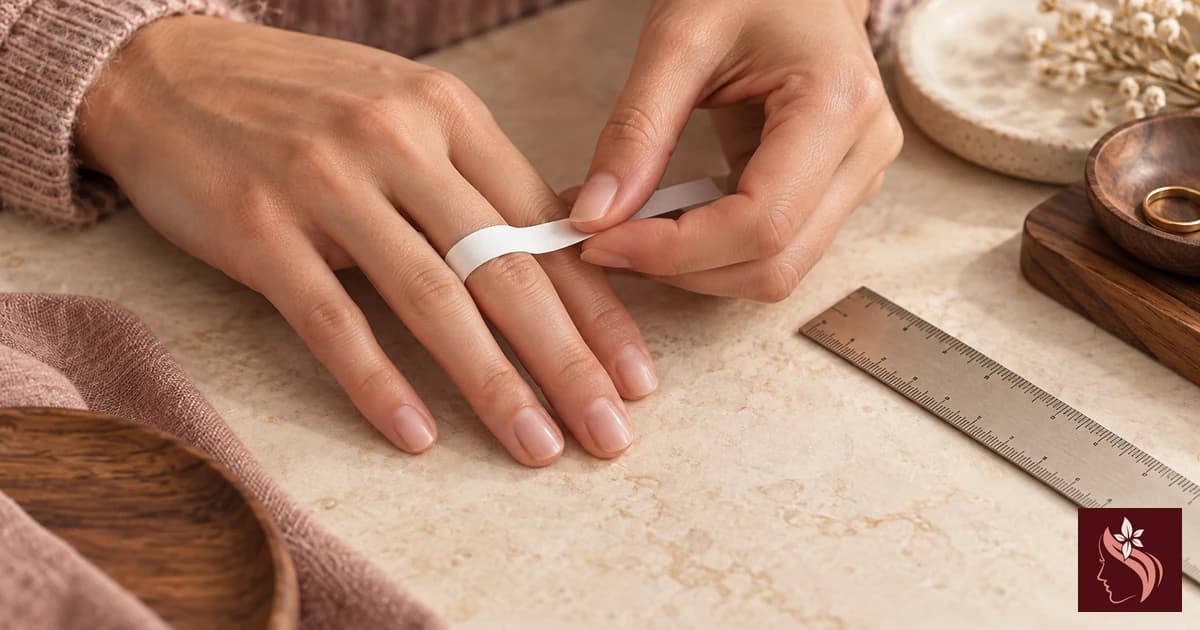
GIA’s guidance on accurate ring sizing explains that the appropriate gauge can depend on the ring’s width and design. It describes the practical fit as loose enough to pass over the joint and settle where the ring will be worn, without turning freely. That is a helpful concept, not a substitute for a jeweler’s assessment of a specific hand and ring. The visuals in this guide are generated illustrations of tools and objects; they do not demonstrate a measured size or a fit result. Our product-testing box describes the publisher’s method but does not claim a ring has been tested here.
Sources: gia.edu
Choose the finger and intended ring before measuring
Start with the exact finger and hand on which you plan to wear the ring. A ring that fits one finger may not fit its counterpart on the other hand, and the finger can vary along its length. Decide whether the ring is meant to sit near the base, at a knuckle, or in a stacking position. If you are replacing a ring you already own, check that it fits the same finger and that its shape and width are reasonably similar. A familiar ring can offer a reference point, but an old size label is not proof that a new design will feel identical.
If the ring has a prominent setting or is part of a wedding set, note that before choosing a measurement tool. GIA warns that a mounted stone’s culet can protrude into the finger hole and may require a grooved mandrel to avoid damage when measuring an existing ring. Some designs have open space, unusual profiles, or bands worn in combination, which can alter how they sit. Do not force a ring or a gauge over a joint. If the ring is valuable or the setting is delicate, let a professional jeweler measure it with the appropriate tool.
Sources: gia.edu
Use a sizing tool and record the method
A reusable ring sizer can provide a better starting point than estimating from a photo. Follow the tool maker’s instructions, wear it on the target finger, and note the size only after it rests where the new ring is intended to sit. The loop should pass over the joint without force and feel secure at the base. Try not to pull the ring sizer tight just to obtain a smaller number. Record the tool, its size system, the finger, and the hand so you can compare the result with the jeweler’s chart. If the number falls between sizes, ask the merchant how its products are sized.
A strip of paper or string can be used as a rough circumference estimate only if the seller’s method explicitly allows it. The material can stretch, overlap, or slip, and a narrow strip does not reproduce the feel of a metal band. If you use it, mark the overlap without tightening, measure with a ruler in the specified unit, and repeat the process several times. Inconsistent readings are a sign to stop and seek a jeweler’s measurement. Do not convert from a homemade circumference by using an unlabeled internet table; compare with the exact chart supplied by the merchant selling the ring.
Sources: gia.edu
Consider the knuckle and band width
A ring needs to pass over the knuckle and remain comfortable where it is worn. If the knuckle is larger than the base of the finger, the measurement may feel loose at the base or tight during removal. Do not assume a split difference will suit you; ask a jeweler about design options, sizing beads, or other solutions for the exact ring. Any modification depends on the band and setting. If a ring spins or slides, a jeweler can inspect the fit, but an at-home adjustment or adhesive spacer may damage the piece or create an uncomfortable fit.
Band width can change how a ring feels. GIA recommends using a wide-finger sizing gauge for rings wider than four millimeters and cautions against forcing the gauge over the joint. A wide band covers more of the finger than a narrow band, so measuring with a slim tool and selecting a broad ring by the same number may not produce the feel you expect. Try to measure with a comparable width when possible, or ask the retailer how its size chart accounts for band width. For stacking rings, consider whether several bands worn together change the space they occupy.
Sources: gia.edu
Check the merchant’s chart and return terms
Once you have a measurement, open the current size chart on the exact product page. Verify whether it uses U.S. numerical sizes, letters, inner diameter, inner circumference, or another regional system. Check the unit and the chart’s instructions. A size table for one brand or collection may not apply to another, and a marketplace conversion table may round measurements differently. If the item is a limited edition, personalized, or not resizable, contact the seller before purchase. Save the chart or note the date checked because size guides can change.
Review the return, exchange, resizing, and shipping policies before choosing. Confirm who pays for a return and whether personalized or engraved rings are excluded. If the merchant allows in-store sizing or exchanges, check whether the service is available in your location. Current price and availability belong to the merchant, not this guide. A coupon does not change the sizing system and should not pressure you to place an order before fit details are clear. For an expensive purchase, a local jeweler’s measurement and the seller’s written confirmation are practical safeguards.
Special designs may need a jeweler’s advice
Wide bands, convex interiors, open or bypass rings, eternity bands, bridal sets, and designs with stones around the full circumference can need extra sizing consideration. GIA’s professional guidance documents several such circumstances and recommends using suitable tools for different designs. Some rings cannot be resized in the usual way because changing the band could disturb the setting or alter a pattern. Do not assume that every jeweler can resize every ring, or that a size can be changed by a fixed number without consequences. Ask about material, design, warranty, and service before you buy.
If swelling, injury, a skin condition, or another health issue affects your hand, pause rather than using a ring to diagnose or manage it. This article is not medical advice. When a ring becomes difficult to remove or causes pain, seek appropriate help instead of forcing it. For a valuable piece, bring the ring and any paperwork to a qualified jeweler. For online shopping, send clear written questions and keep the response. A seller’s sizing guarantee should be read with its stated conditions, including whether the ring is eligible for adjustment and how that affects the finish or warranty.
Sources: gia.edu
A practical measurement record
Make a short note with the hand and finger, your measurement tool, the result and unit, whether the band is narrow or wide, the seller’s size chart, and any uncertainty about the knuckle or setting. If you used a home tool, repeat the measurement under the tool’s instructions and record each result rather than selecting the smallest number. Compare the data with a current chart for the exact ring. When the readings differ or the chart is unclear, ask the jeweler for a professional measurement rather than averaging guesses.
Before submitting an order, confirm the selected size in the cart, not just in the dropdown you viewed earlier. Check the selected metal and ring width as well, since a page may reset a choice when you change variants. If the ring is a gift, ask about resizing after the recipient tries it and check whether a gift receipt keeps the return window clear. This record will not make sizing exact, but it helps you describe the situation to a merchant and compare the answer against the seller’s actual policy.
Conclusion
At-home ring sizing is a useful first estimate when you use a suitable tool, measure the intended finger, and check the exact seller’s chart. Fit also depends on the knuckle, band width, setting, design, and personal comfort. Do not force a gauge or expect a paper strip to guarantee the final size. For a wide, unusual, high-value, or difficult-to-resize ring, ask a jeweler to measure and confirm the right approach. Review the return and resizing terms before purchase so you know what options remain if the ring does not feel as expected.


Frequently Asked Questions
Can I measure ring size with string?
String or paper may provide a rough circumference estimate, but it can stretch or slip and does not reproduce a metal band. Follow the merchant’s method and confirm uncertain results with a jeweler.
Does ring width affect fit?
It can. GIA advises using a wide-finger sizing gauge for rings wider than four millimeters. Ask the exact seller how the band design affects its size guidance.
When is the best time to measure my ring size?
Use a consistent, comfortable condition and repeat the seller’s recommended method. If results vary or your hand is affected by swelling or injury, wait or consult a jeweler rather than forcing a size choice.
Will the same ring size fit every brand?
Not necessarily. Check the exact merchant’s current chart and sizing system, and confirm whether its measurements refer to inner diameter, circumference, or a regional size.
Sources
- gia.edu (checked 2026-10-28)