
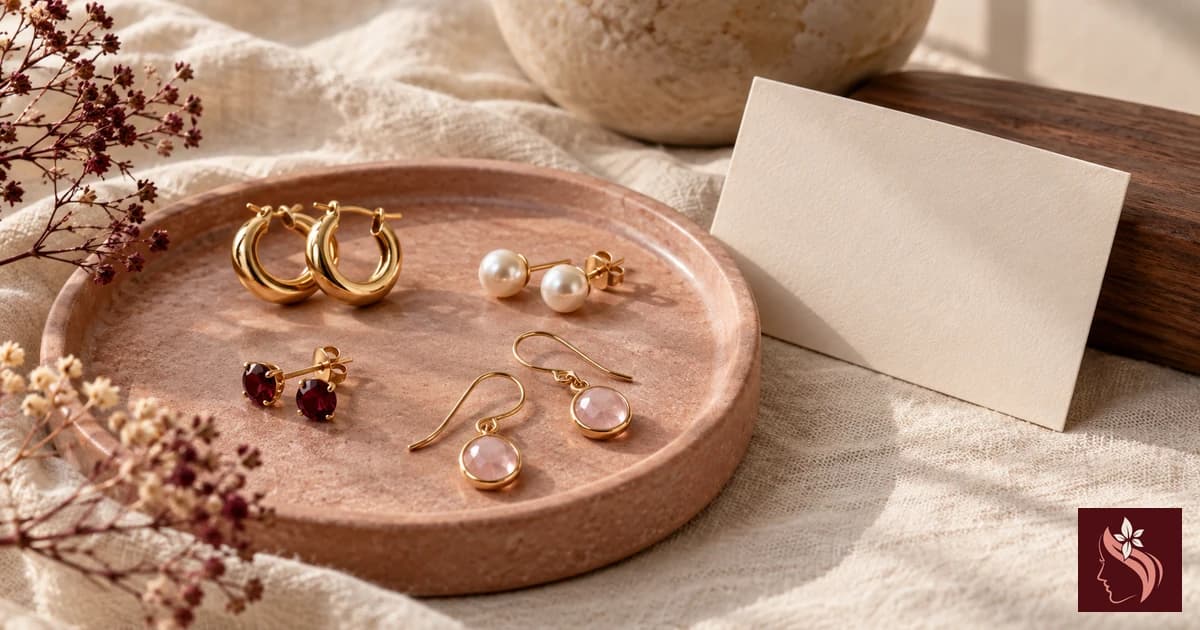
Treat ‘hypoallergenic’ as a prompt for more detail
The word “hypoallergenic” may sound like a complete answer, but by itself it does not tell you the exact alloy, which components contain that alloy, or how a particular person will respond to the item. Jewelry can include a post, backing, clasp, chain, solder, coating, and decorative setting made from different materials. A label that describes only the main surface may leave the parts that touch the skin unspecified. Use the term as a reason to look for material details, not as proof that an item is nickel-free or suitable for every wearer.
Nickel is a common cause of allergic contact dermatitis, and the American Academy of Dermatology (AAD) notes that earrings and their backs, watches, necklaces, rings, and bracelets can be sources of exposure. The AAD gives avoidance suggestions for people with nickel allergy and advises seeing a board-certified dermatologist for diagnosis or concerning symptoms. This article does not diagnose an allergy, recommend treatment, or promise that a particular jewelry material is safe for an individual. Its guidance is about reading product disclosures and deciding what to ask the seller.
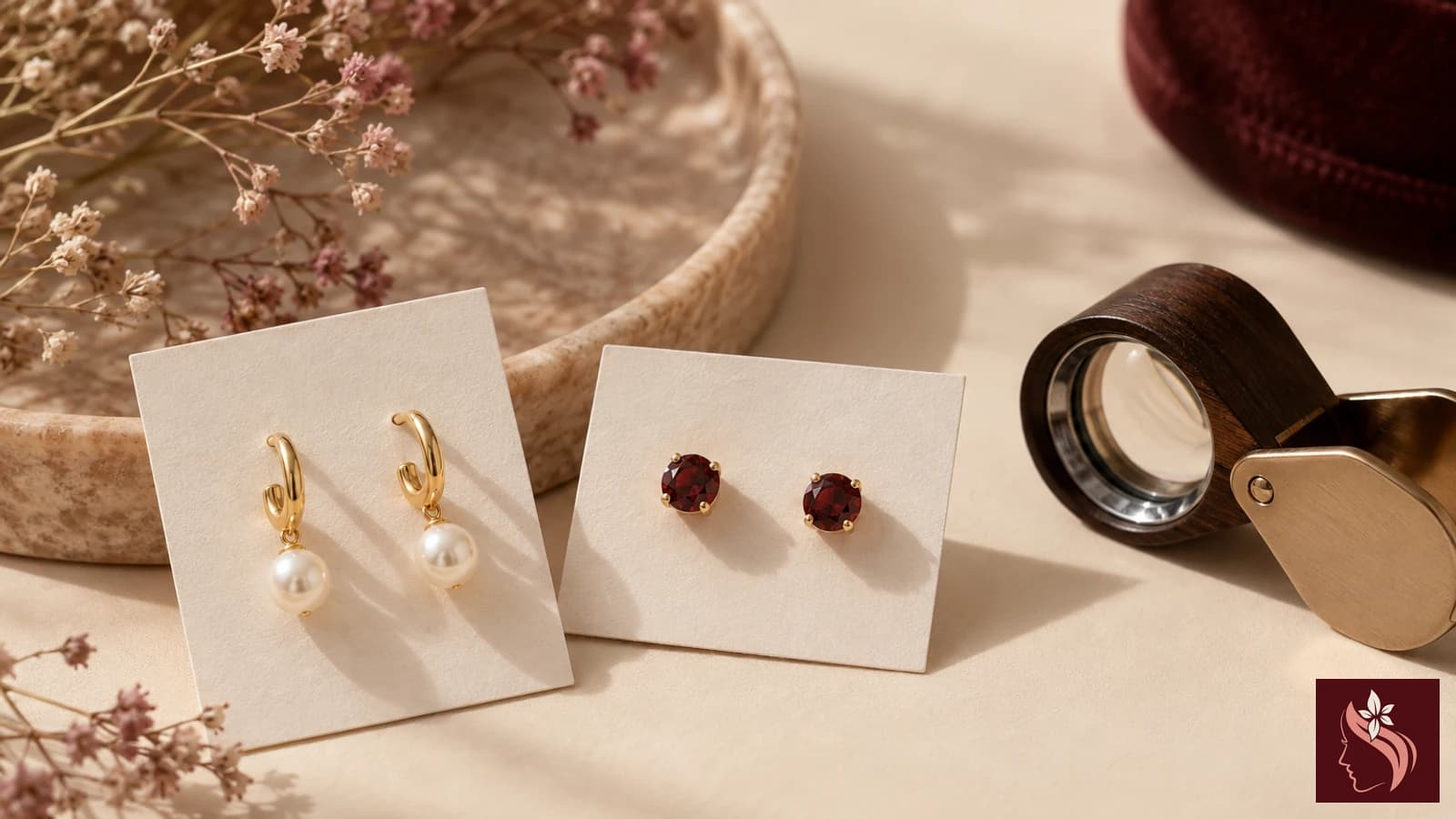
Ask what every skin-contact component is made from
When a seller uses the word hypoallergenic, ask which metal is used in the earring post and back, necklace clasp and chain, bracelet closure, ring interior, and any area that may rub against skin. Ask whether the item is plated or coated and what material sits underneath the finish. A coating may cover some surfaces but not a clasp or exposed edge. The product page should describe the specific item or variant rather than linking to a general materials page that could cover many products. If the information is not available, keep that unknown visible in your comparison.
Look for exact words such as the metal name and alloy details rather than broad phrases like “premium metal,” “skin-friendly,” or “sensitive-skin safe.” If the seller says nickel-free, ask whether that applies to all components and how it is verified. Do not assume that sterling silver, stainless steel, gold, or a plated surface is automatically suitable for a person with a known allergy; composition, exposure, and individual medical history matter. We do not label specific materials as universally safe. A dermatologist can help evaluate a suspected allergy and discuss personally appropriate avoidance choices.
Understand why a surface finish is not the full material story
A jewelry finish may be gold colored, silver colored, rhodium plated, lacquered, or described with another surface term. That visible layer does not necessarily identify the metal in the component beneath it or in parts that are not coated. Small areas can wear with use, and a clasp or post may have a different composition than the decorative front. Ask the maker to identify each relevant component and explain whether the finish has a stated thickness or maintenance requirement. A product photograph cannot reveal the alloy, coating continuity, or amount of a metal in a hidden part.
FTC Jewelry Guides address truthful descriptions of jewelry composition and metallic content in U.S. marketing. For shoppers, the practical takeaway is to compare what the seller actually discloses and ask for clarification rather than treating a style name as a materials certificate. Save the exact listing, selected variant, and any written answer from customer service. If the product details are inconsistent, do not use an affiliate recommendation or discount code as a reason to overlook them. A clear written record makes it easier to compare products and to ask a clinician a specific question about the materials involved.
Sources: ftc.gov
What the AAD says about nickel avoidance
The AAD advises people with nickel allergy to avoid exposure and gives examples of jewelry materials that may be options, including nickel-free items and specified metals such as surgical-grade stainless steel, higher-karat yellow gold, pure sterling silver, or platinum. This guidance is not a guarantee about every product sold under those labels. A piece can contain multiple alloys or components, and an individual’s situation should be discussed with a dermatologist. The AAD also recommends professional evaluation for a suspected allergy or a rash that is blistering, infected, or recurring.
If you have a confirmed nickel allergy, use the avoidance plan recommended by your dermatologist. Ask the retailer for the exact alloy and whether all skin-contact parts are covered by the claim. Do not test a suspected allergen on your skin or rely on an online symptom photo to decide whether a rash is an allergy. If a product causes irritation, stop wearing it and get appropriate medical guidance, especially when symptoms persist or worsen. This guide does not recommend a treatment or a DIY barrier as a substitute for professional advice.
Sources: aad.org
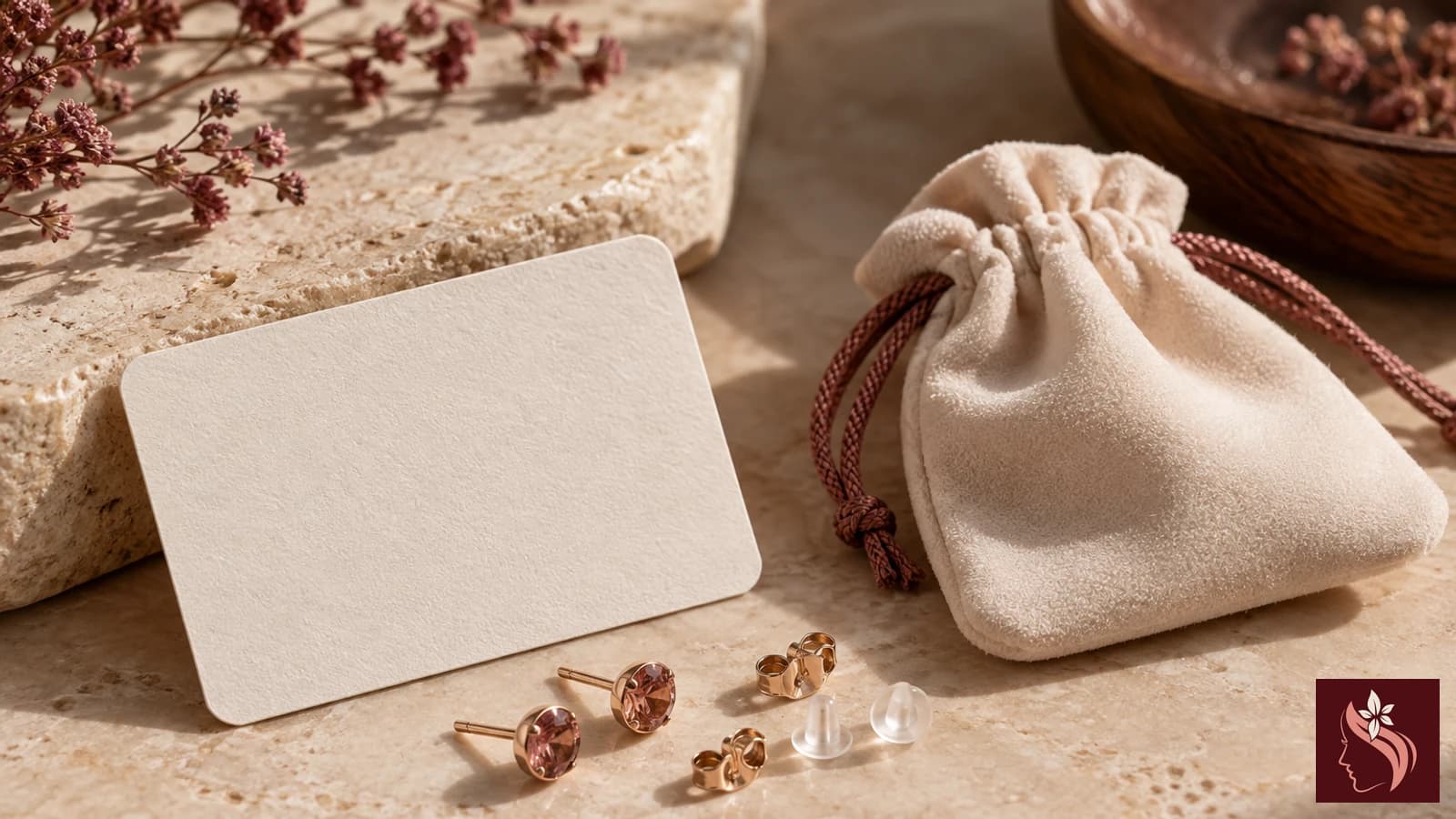
Use a product-label checklist before choosing
For each product, record the item name and variant, material of the post or clasp, main alloy, plating or coating, any nickel-free claim, care directions, merchant response, and date reviewed. Ask whether the claim applies to every component or only the visible face. If an earring comes with removable backs, check their material separately. For rings, consider the inside of the band and any exposed setting. For necklaces, inspect the clasp and jump rings in the written material description. The checklist helps you spot gaps without asking you to perform a chemical analysis or diagnose a medical response.
A seller’s answer should be specific enough to compare: “The posts and backs are stated as X; the decorative surface is Y; the coating covers Z; the clasp is separately described as W.” If the merchant cannot provide that information, decide whether you are comfortable with the uncertainty or choose a better-documented option. Check return terms, but remember that wearing an item to test for an allergy is not a substitute for medical care. A return policy also does not identify the materials. Keep product packaging and order details if you need to contact the seller later.
Keep a copy of the exact page and the seller’s answer, including the date and selected color or size. If a marketplace seller changes its listing, a saved record helps you compare what was promised with the item received. Check that the description does not quietly change between a headline, material dropdown, and care note. If a product includes several pairs of earrings or interchangeable backs, ask whether the stated alloy applies to every component in the set. A complete answer lets you make a more informed choice; it still cannot predict an individual response or replace professional advice for a diagnosed allergy.
After delivery, use the item record to confirm that the packaging and product description match the purchase. Do not rely on a skin reaction as a way to identify metal, and do not keep wearing an item that irritates you. If you have an established allergy, share the written material details with your dermatologist when asking whether a specific product is appropriate. If you do not have a diagnosis but notice a recurring or concerning rash, seek professional evaluation rather than trying several pieces to compare symptoms. This site offers no medical diagnosis or guarantee, and product reviews should not claim that one broad label prevents every reaction.
Sources: ftc.gov
Separate material preference from medical advice
People can prefer a particular metal for reasons that are not medical, and those preferences are valid. You may want a specific color, lower maintenance, a certain price range, or a material you already wear comfortably. However, “I have worn similar-looking jewelry before” does not establish that the new item has the same composition. Likewise, a product marked hypoallergenic is not a diagnosis or an individualized recommendation. Keep personal preference, seller disclosure, and medical advice as three separate sources of information.
If you develop itching, redness, or another skin concern after wearing an item, remove it and seek professional guidance if symptoms persist, recur, blister, or look infected. Only a qualified clinician can assess whether an allergy or another condition is involved. Bring the product or its full material details if you seek care. Do not continue wearing a piece to prove that it caused a reaction, and do not rely on this article to choose medication or treatment. Her Glamness links to authoritative consumer and health resources so readers can locate the primary guidance and discuss individual concerns with a professional.
Sources: aad.org
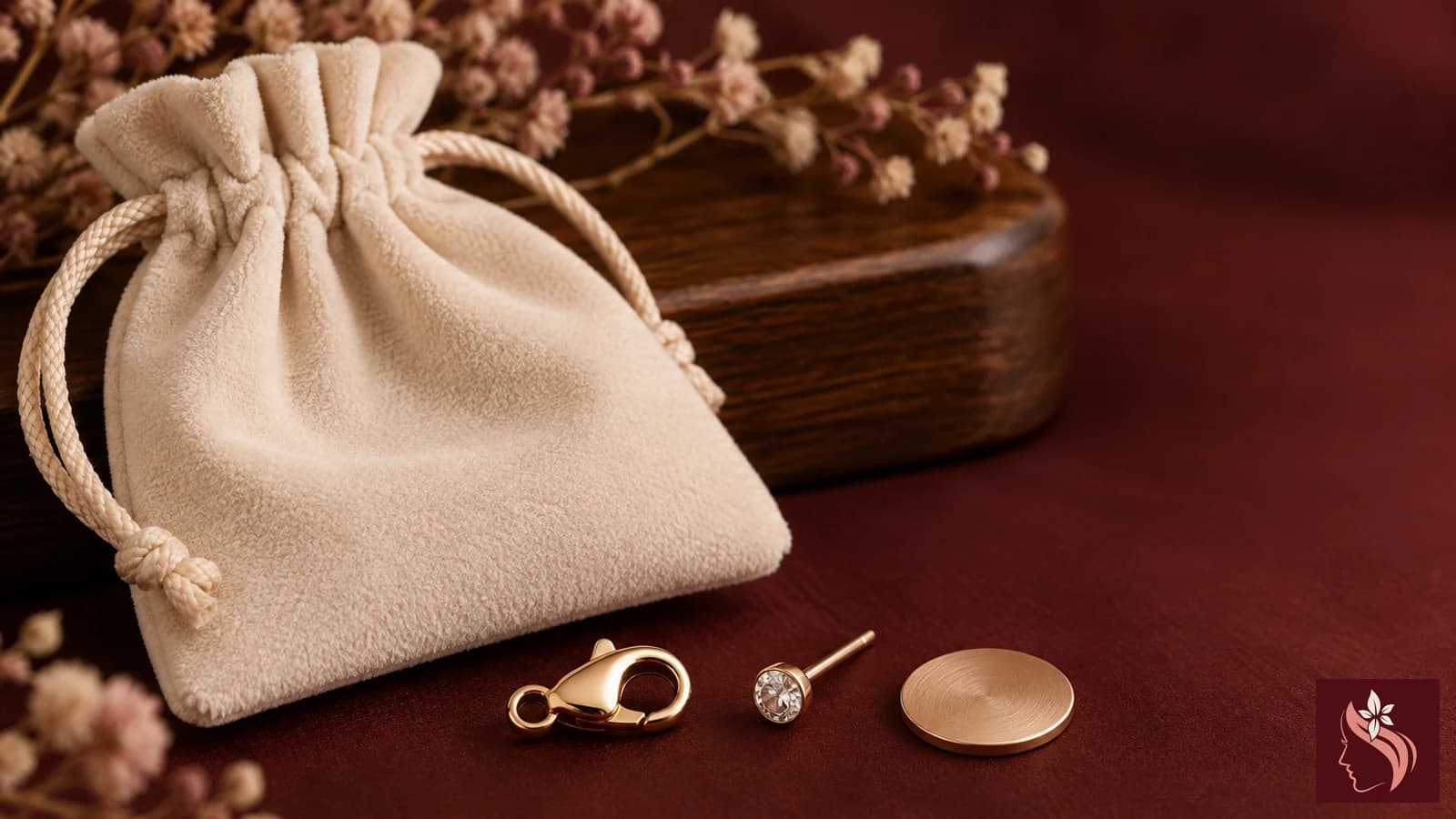
Conclusion
“Hypoallergenic” is not a full materials list and cannot promise how every person will respond. Read the exact item’s disclosures, ask about posts, backs, clasps, coatings, and hidden components, and verify whether a nickel-free claim covers the entire piece. For a confirmed or suspected allergy, follow a dermatologist’s advice rather than trying a product as a skin test. Clear seller records help you compare jewelry; professional care helps you address an individual health concern. If a key material remains undisclosed, treat that as uncertainty rather than converting the label into a safety guarantee.
Frequently Asked Questions
Does hypoallergenic mean nickel-free?
Not necessarily. The word alone may not identify all components or alloy content. Ask the seller whether every skin-contact part is nickel-free and how that statement is supported.
Can hypoallergenic jewelry cause a reaction?
A label cannot predict an individual response. If jewelry irritates you, stop wearing it and consult a qualified health professional when symptoms persist, recur, blister, or appear infected.
Which jewelry metals are safe for nickel allergy?
The AAD lists several materials as possible avoidance options, but no label guarantees that every product or component is suitable for an individual. Follow your dermatologist’s guidance and verify exact composition.
Can I test jewelry for nickel at home?
This article does not recommend a skin test or DIY chemical test. Ask the seller for full material details and discuss a suspected allergy with a dermatologist.