
Pearl terminology begins with how the bead formed
The words natural, cultured, and imitation describe different origins or materials, not a simple ladder of beauty or quality. GIA explains that natural pearls form without human intervention, while cultured pearls grow after people intervene in the process and care for the mollusk. Cultured pearls are real pearls; “cultured” does not mean fake. Imitation pearls are different materials made to look like pearls. The distinction matters when a seller describes a necklace, when you compare two listings, and when you choose care instructions. Read the full product description instead of judging by roundness, shine, or color in a photograph.
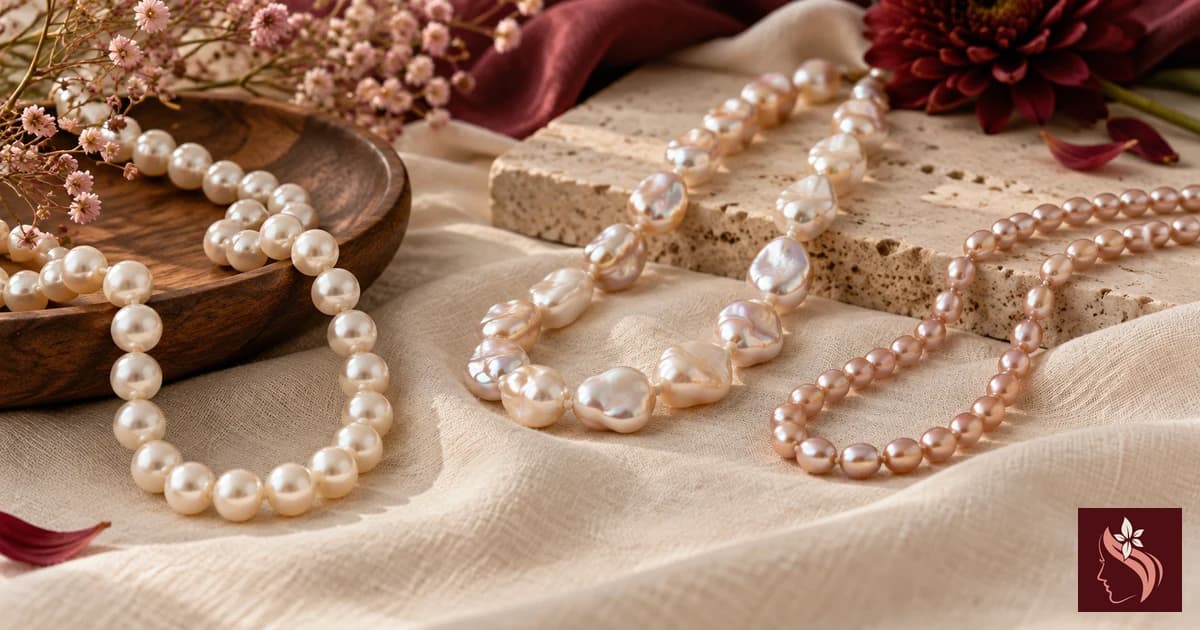
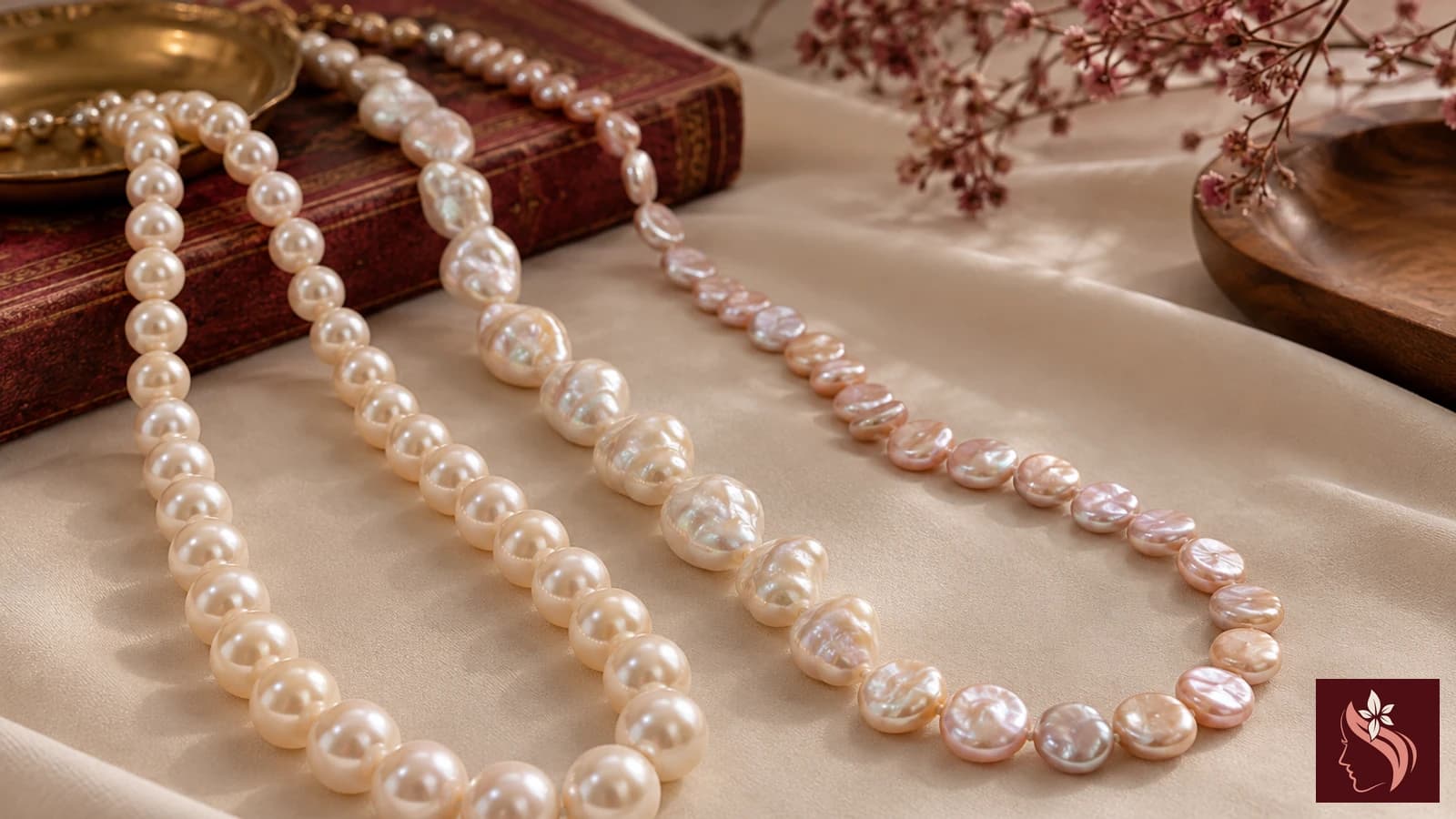
Most pearls shown in everyday jewelry retail are cultured or imitation rather than natural; FTC consumer guidance says natural pearls are very rare and that most jewelry contains cultured or imitation pearls. This is general consumer context, not a statement about a specific store or current inventory. A pearl’s luster, surface, shape, matching, size, and treatment may affect how it looks, but those visible qualities do not prove whether it is natural, cultured, or imitation. The illustrations in this article are generated editorial imagery, not authenticated samples and not a visual identification test.
Sources: gia.edu; my.gia.edu; consumer.ftc.gov
Natural pearls form without human intervention
A natural pearl forms in a mollusk without a person deliberately initiating the process. The term is about origin; it does not mean that every natural pearl is spherical, flawless, untreated, or valuable at a particular level. Natural pearls can vary in shape, color, surface characteristics, and condition, just as other organic gems do. If a seller uses “natural” in a product title, check whether the description explains the claim and identifies which pearls in a multi-stone piece it applies to. Ask for documentation when origin is a material reason for your purchase.
GIA notes that natural pearls are rare in today’s market and that many natural pearl pieces may be antique. That makes careful records particularly useful for a high-value purchase. Ask whether a gemological report is available, what the report identifies, and whether the report corresponds to the exact strand or stone offered. Do not accept a generic certificate image or a seller’s use of “natural look” as proof of natural origin. Words such as “natural color,” “natural style,” and “natural pearl” can describe different ideas; ask the seller to clarify the exact meaning in writing before deciding.
Sources: my.gia.edu; consumer.ftc.gov
Cultured pearls are real pearls formed with human intervention
Cultured pearls form in mollusks after people intervene in the process, then the mollusk produces nacre around the introduced material or tissue. GIA identifies cultured pearls as genuine pearls and explains that modern cultivation can occur in freshwater or saltwater mollusks. A listing should use “cultured” clearly; do not treat the term as a synonym for imitation. The exact type may matter to a shopper, so look for any stated freshwater or saltwater origin, pearl variety, size range, treatment, and care information that the maker provides. Do not infer those details from a strand’s color or shape.
Cultured pearls include different varieties and production methods, and a short product page may not provide each detail. If the seller names a variety such as Akoya, freshwater, South Sea, or Tahitian, verify that wording in the product record or supporting document. GIA’s educational materials describe pearl types and quality factors, but they do not identify the item in an unverified marketplace photo. A report may cover some aspects and not others; read its scope. You can still choose a cultured pearl based on appearance, price, or style preference without claiming that it is naturally formed or that one pearl type is universally superior.
Sources: gia.edu; my.gia.edu; gia.edu
Imitation pearls resemble pearls but are made from other materials
Imitation pearls are beads or objects made from another material to resemble pearls. GIA notes examples such as plastic, shell, or composite materials. Some imitations are carefully finished and attractive in their own right, but they are not natural or cultured pearls. A clear product description should say what the imitation is made from where that information is available. Treat “shell pearl,” “faux pearl,” “pearl effect,” and similar terms as wording to investigate rather than proof of a specific composition. Ask whether the product contains a shell bead, glass, plastic, coating, or another material.
An imitation can look convincing in a studio image, and even an apparently uneven surface or a glossy finish is not a dependable test for identity. GIA describes cases where imitation materials can resemble pearl strands and where laboratory tests are required to identify them. Never use a scratch, heat, tooth, or solvent test on a jewelry piece; it can damage the object and still give an uncertain answer. If you have a valuable item and need to know its identity, ask a qualified gemologist or laboratory about suitable examination. For a new purchase, rely on the seller’s complete written description and return policy.
Compare quality and construction separately from origin
Origin is only one part of a pearl purchase. GIA lists quality factors such as size, shape, color, luster, surface, nacre, and matching for strands and multi-pearl pieces. Those are not all equivalent to origin, and no single feature tells you everything. A natural pearl may have visible surface characteristics; a cultured pearl may have a shape or color you prefer; an imitation may suit a lower-stakes outfit. Compare the actual traits the seller records rather than treating “real” as a substitute for a full quality description. If a listing gives a grade, find the grading system and who assigned it.
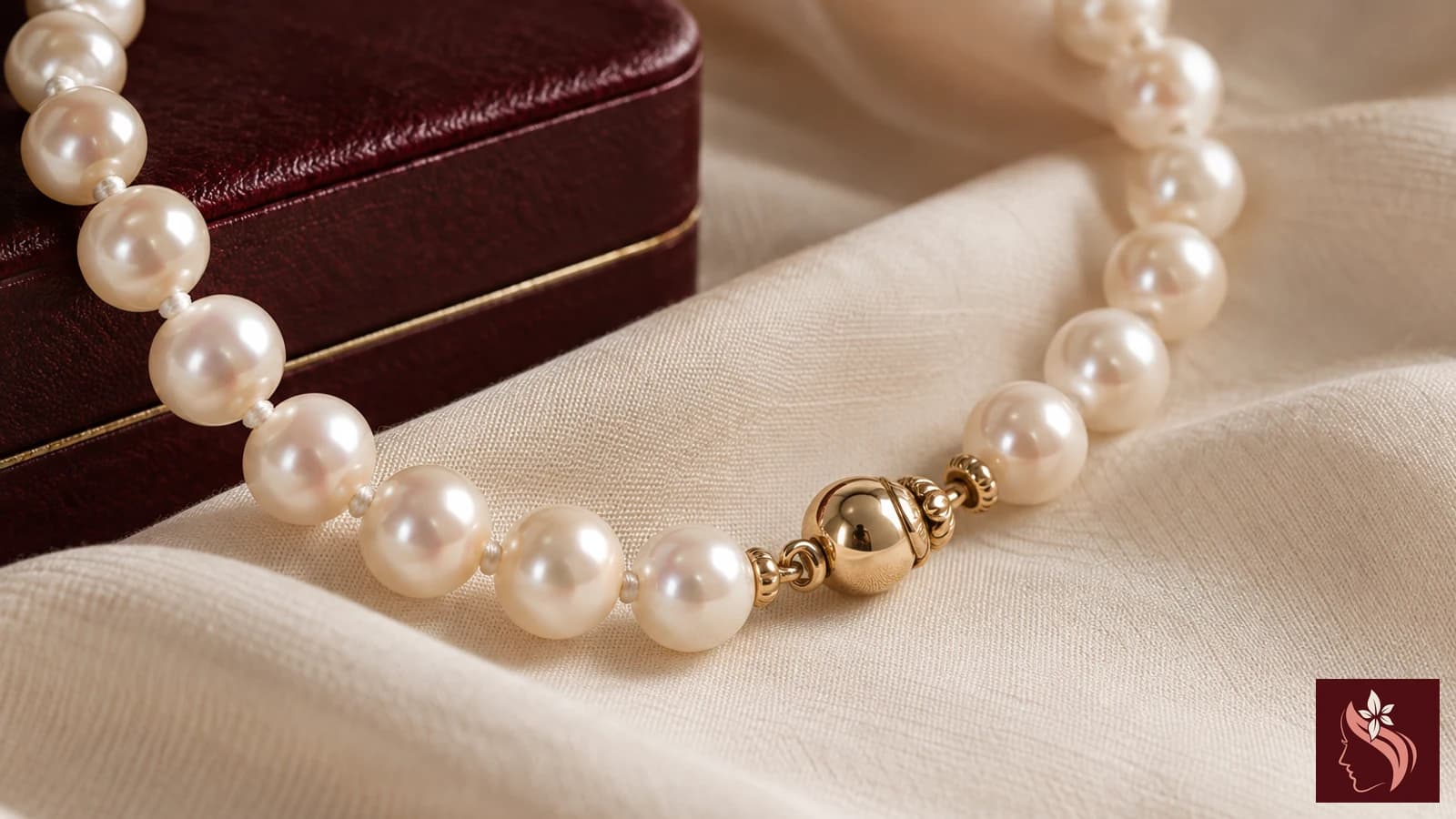
Construction details matter too. Check the clasp material, strand length, whether pearls are knotted, the bead dimensions, and whether the listing says the strand is matched or graduated. Ask whether the photographed item is the exact piece or a representative image. Look at the return window and whether a seller can provide a report for the specific strand. A product image can help you understand the styling, but it cannot establish pearl identity, nacre thickness, treatment, or quality grade. Keep these questions separate so an attractive photo does not become a substitute for material evidence.
Sources: gia.edu; consumer.ftc.gov
Care changes with pearl material and strand construction
GIA recommends protecting pearl jewelry from harsh chemicals and rough surfaces, wiping it after wear, and storing it in a soft pouch or case. It advises against putting pearls in ultrasonic or steam cleaners and describes warm, soapy water for occasional thorough cleaning where suitable. Always check the exact maker instructions first, especially for coated or imitation beads, glued components, and pieces with a metal setting. Do not soak a strand merely because a single loose bead could tolerate moisture; the thread, knotting, clasp, coating, and assembly also need consideration.
Pearl strands may need periodic inspection or restringing. GIA notes that silk thread can darken, stretch, or wear thin and that knots can limit loss if a strand breaks. If the knots look loose, the thread is frayed, or a clasp moves, stop wearing the piece until a jeweler can assess it. Store pearls away from sharp jewelry and heat, and avoid applying perfume or hairspray directly to a strand. Care guidance reduces avoidable exposure but does not guarantee that a surface will never change. A maker’s care direction should govern when it is more specific than a general guide.
Sources: gia.edu
Questions to ask before buying a pearl piece
A useful seller message is specific: Are these pearls natural, cultured, or imitation? If cultured, what variety and growing environment are stated? If imitation, what material is used? Are any treatments disclosed? What are the measured bead and strand dimensions? Does the listing show the exact item? What cleaning method and storage does the maker recommend? Can the seller provide a report or written material record for this piece? These questions do not require a shopper to become a gemologist; they ask the seller to explain claims about the product being offered.
Save the answers along with the product page and receipt. If a response uses vague phrases such as “real-looking,” “natural style,” or “pearl-like,” ask for a direct material description. If the origin is important but cannot be documented, choose whether the uncertainty fits your budget and purpose or look for a more transparent listing. A report is most useful when it identifies the exact piece and states its scope. Do not mistake a retailer’s general education page or a stock image for evidence about the strand you will receive.
Sources: ftc.gov; consumer.ftc.gov
Conclusion
Natural pearls form without human intervention; cultured pearls are real pearls grown with human intervention; imitation pearls are other materials made to resemble them. Use those terms to begin your comparison, then check the exact item’s origin wording, quality details, treatments, strand construction, and care instructions. A photo cannot authenticate a pearl. Ask for the seller’s written details and appropriate documentation when origin matters, and consult a gem professional for a valuable piece. Choose by the evidence and style you actually want rather than treating one term as a universal measure of beauty or value.
Frequently Asked Questions
Are cultured pearls real pearls?
Yes. GIA describes cultured pearls as real pearls formed after human intervention in the growth process. They are distinct from imitation beads made from other materials.
What is the difference between natural and cultured pearls?
Natural pearls form without human intervention. Cultured pearls grow in mollusks after people initiate or support the process. Appearance alone cannot reliably establish which origin applies.
Can I tell imitation pearls from real pearls by looking at a photo?
No. Imitations can resemble natural and cultured pearls. A product photo is not a reliable identity test; check the seller’s written description or consult a gemologist for a valuable item.
Can pearls go in an ultrasonic cleaner?
GIA says pearls should not be cleaned in an ultrasonic or steam cleaner. Follow the maker’s instructions and ask a qualified jeweler if the strand or treatment is uncertain.
Sources
- ftc.gov (checked 2026-10-28)
- consumer.ftc.gov (checked 2026-10-28)
- gia.edu (checked 2026-10-28)
- my.gia.edu (checked 2026-10-28)
- gia.edu (checked 2026-10-28)