
Measure the chain, not just the style name
Necklace labels such as choker, princess, matinee, or opera are familiar shorthand, but their ranges and the way sellers use them can vary. The most useful product fact is the chain’s stated length in inches or centimeters, along with whether that measurement includes an extender or pendant. A 16-inch chain will not sit at the same point on every body, and a pendant adds visual drop below the chain. Begin with the exact measurement on the product page, then decide how you want the necklace to sit with your neck, neckline, and outfit.
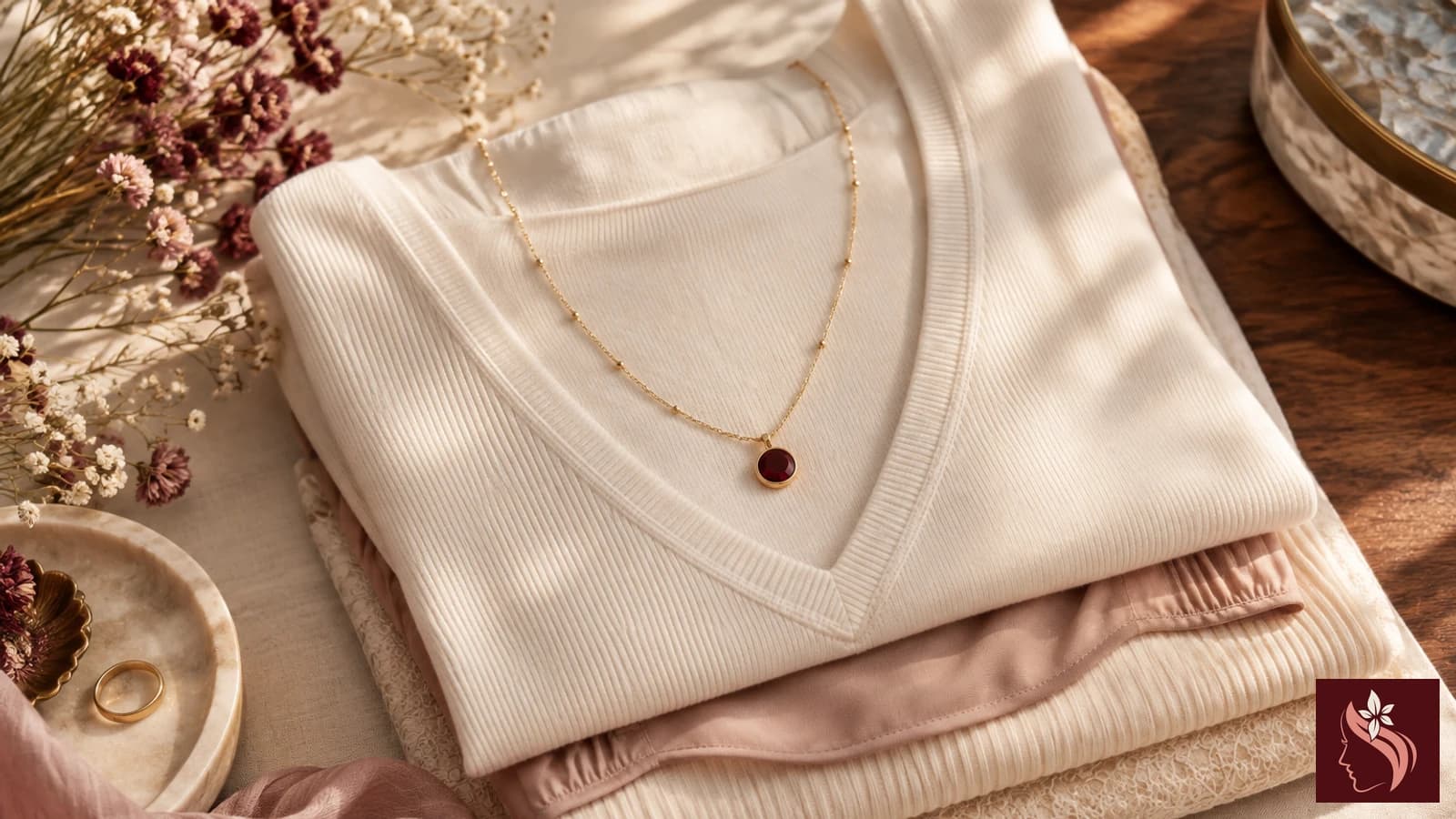
Retailer charts can help you visualize a length, but they are examples rather than guarantees. Tiffany’s U.S. guide lists several chain lengths and recommends using a string cut to the length you are considering, then placing it around the neck to see where it falls. It also notes that neck circumference and pendant size affect placement. Treat any visual guide as a starting point. The images in this article are generated editorial scenes, not a fit test or a universal body-position chart. We do not claim a particular length will flatter, fit, or suit every wearer.
Sources: tiffany.com
How common chain measurements are presented
Many U.S. retailers show chains around 16, 18, 20, 24, or 30 inches, but the exact options depend on the seller and the design. Tiffany’s chart, for example, pairs selected inch measurements with approximate centimeter values. Those values are useful for comparing the length of a chain; the label should still be checked on the exact listing. If a retailer gives a range, see whether it describes a selectable chain length, an extender, a pendant’s total drop, or the neck placement shown in a diagram. Do not assume all three measurements refer to the same thing.
A chain’s end-to-end length may be measured with the clasp closed or open depending on the merchant’s method. The product page should define the convention or show a measurement diagram. If you have a necklace that sits where you like, lay it flat and measure it using the same end points described by the seller. For a chain with an extender, record both the base length and the added range. If the seller does not clarify whether a pendant is included in the overall drop, ask before buying. A few centimeters can shift the visual position enough to matter with a particular neckline.
Sources: tiffany.com
Use string or a flexible tape to preview a length
To try a chain length at home, cut a non-stretch string to the exact stated measurement or use a flexible tape measure. Put it around your neck at the same point where the necklace would sit, then let the ends meet where the clasp would close. Check the loop in a mirror from the front and side. Repeat with the tops, dresses, or collars you expect to wear. This is a visualization aid, not a substitute for the seller’s measurement or a precise evaluation of fit. Avoid tying a string tightly around your neck; it should rest comfortably and be easy to remove.
Try the measurement over the neckline rather than only on bare skin if you often wear necklaces on top of clothing. A high crew neck, open collar, or thick sweater changes where the chain appears. A pendant also changes the drop, and a heavy pendant may pull a chain into a different curve than a light charm. If you layer pieces, test each string at the length you are considering and notice where the pendants overlap or catch. There is no required spacing or universal style formula. Your comfort, clothing, and movement matter more than a chart’s shorthand label.
Sources: tiffany.com
Account for neck circumference and pendant drop
Two people wearing the same chain length may see a different placement because neck circumference, shoulder width, posture, and the shape of the neckline vary. The chain may sit higher on one person and lower on another without either body being outside a standard. A seller’s model image cannot show how the same piece will fit you unless the listing gives clear measurements and enough context. If you prefer a close-fitting chain, check the circumference where you want it to rest and compare it with the actual chain length, allowing room for the clasp and a comfortable fit.
For a pendant, consider both chain length and the pendant’s vertical dimension. The center point may hang several inches below the chain line, so a short chain with a long pendant can reach lower than expected. Look for the pendant height, bail, and chain-to-pendant connection in the listing. If the jewelry has an adjustable extender, see whether the listing gives each end of the adjustment range. Do not assume a listed “drop” equals the chain length. If the image shows a model and the product page omits measurements, request dimensions rather than estimating from a photo.
Sources: tiffany.com
Choose a length for the neckline and occasion you actually wear
Think about the garments and situations in which you expect to wear the necklace. A shorter chain may sit above a neckline, while a longer chain can fall over a blouse or dress; those placements depend on your own proportions and the exact clothing. For a button-front shirt, imagine how the chain interacts with the collar and open buttons. For a turtleneck, a chain may be worn over the fabric if the maker’s instructions and weight make that comfortable. For work, travel, or exercise, closures and pendant movement may matter more than a style name.
If the necklace is a gift, ask about the recipient’s preferred lengths or choose a merchant with a suitable adjustment option and clear returns. Avoid guessing from age, gender, or a generic “standard women’s length.” A gift receipt can help if the fit differs from the recipient’s preference. Consider clasp accessibility and whether the wearer can put the chain on and take it off comfortably. If a pendant has sentimental value, check the bail and clasp construction as well as the chain length so that the piece can be worn in the way the recipient prefers.
Read the exact listing and compare adjustable designs
Before purchase, record the merchant, item name, chain length, unit, extender range, pendant height, metal, closure, and any size diagram. Confirm that the details belong to the selected color or variant. Some product pages show a default image while the selected length changes in a dropdown; check the selected option before saving the information. Note the date because a product page or assortment can change. If the chain length appears only in the title and conflicts with the specification table, ask the merchant which number applies to the item being shipped.
Adjustable designs can be convenient, but they are not automatically suitable for every wearer. Check the minimum and maximum length, whether the extender is removable, where the clasp will sit, and whether a pendant can slide or rotate. A very delicate chain may have a different care requirement than a larger-link style. Review the return policy, especially for gifts or personalized items. Current price and availability are controlled by the merchant; Her Glamness directs readers to the live product page rather than presenting an outdated price as current. Affiliate referrals should be clearly disclosed when present.
When you compare inches and centimeters, remember that 1 inch equals 2.54 centimeters, and retailer charts may round the converted measurement. Use the unit shown for the selected variant and compare like with like. If a chain includes a clasp, extender, or pendant, check whether each piece is included in the listed figure. A short measurement diagram can show end points, but if it is unclear, request the seller’s measurement method. Do not treat a rounded chart value as a guarantee that the necklace will fall at the same spot as an illustrated model or mannequin.
The chain style can influence how a necklace drapes, although it does not change the stated end-to-end measurement. A stiff or heavier chain may curve differently from a very fine flexible chain; a pendant can pull the front lower; and a broad collar may sit differently from a single strand. Consider these as design variables, not as fit promises. If the item has multiple strands or a layered construction, ask whether the lengths refer to each strand individually. For a meaningful gift or an important event, preview the actual stated length with the intended neckline and leave time to exchange it if the position does not feel right.
Conclusion
A necklace length guide works best when you use the chain’s measured length, preview it against your own neck and clothing, and account for pendant drop. Style names are shorthand that can vary by seller, so confirm the exact inch or centimeter measurement and any extender range. A cut string or flexible tape offers a quick visual check, but the merchant’s product dimensions remain the source for the item. Choose for the clothes, comfort, and use you actually expect, and ask the seller when the listing does not define its measurements clearly.


Frequently Asked Questions
What necklace length is standard for women?
There is no single length that fits everyone. Retailers offer common measurements, but placement varies with neck circumference, clothing, pendant size, and seller conventions. Check the exact chain length.
How can I see where a necklace length will fall?
Use a string cut to the chain’s stated length or a flexible tape, place it comfortably around your neck, and check the position with the neckline you plan to wear.
Does necklace length include the pendant?
Not always. A seller may list the chain length separately from the pendant’s height or total drop. Review the product dimensions or ask the merchant to clarify.
Are choker, princess, and matinee lengths exactly standardized?
No. Names and ranges can vary by merchant. Use the measured length in inches or centimeters and treat style labels as approximate descriptions.
Sources
- tiffany.com (checked 2026-10-28)